E-book Travel Writing and Travel Photography - from Dreams to Hard Reality

The result of a combined total of more than 200 years of experience in the professions of Travel Writing and Travel Photography, the new Global Travel Writers E-book Travel Writing and Travel Photography - from Dreams to Hard Reality contains material that you just will not find anywhere else.

The twelve contributors to this E-book take you through the processes of digging out a story idea; using the services of national tourism offices to arrange "famil" trips and to help research a story; pitching to editors; and much much more. The chapter on “New Media” contains exclusive material and advice on the latest techniques that you can use to enhance your writing’s appeal to editors and, through them, to readers. And because photography is so important, in this E-book we have devoted two comprehensive chapters to travel photography for a digital age.

The E-book Travel Writing and Travel Photography - from Dreams to Hard Reality is priced at just USD 8.95 or AUD 9.95. http://www.globaltravelwriters.com/e-book

China’s New Great Wall

Yangtze River Cruise ship Victoria Katarina

Words and pics by Roderick Eime. Additional photography from Helen Wongs Tours

River cruising is the perfect means to explore the great Yangtze River.

The Yangtze River is a massive tempestuous monster. For centuries it has been both the life and death of the Chinese people, providing food, water for irrigation and a critical transport route, but turning fierce with immense and destructive floods. In 1998, the last destructive flood, some 2000 people were drowned and millions made homeless. This final malicious act of the Yangtze would be the last.

By the Hammer of Thor – A Viking Trail through the North Atlantic


If you were a Viking in the Middle Ages of European history, chances are you were not much of a diplomat or humanitarian. Roderick Eime reflects on the Nordic influence.

The fearsome Viking reputation is not without substance. Beginning around the ninth century until well into the eleventh, the Norse mariners went on an aggressive land grab that often resulted in bloodshed, abduction and pillaging. Today’s mild-mannered and infinitely cultured Scandinavians have countered this unfriendly perception somewhat by reminding us that the Vikings were also skilled seafarers, advanced agriculturalists and energetic traders who advanced the culture and civilization of Europe generally.

No matter which angle you embrace, Vikings still evoke a powerful mystique with their bold and robust architecture and design as well as pagan worship. Just like the Greeks and Romans, Norse mythology is chock-a-block with mighty deities and gods like, Thor (god of thunder), Odin (god of war) and Freyr (goddess of love and fertility). Our days of the week are still named after Norse gods. True.

Vikings and Norse culture has experienced several periods of renaissance over the years with the 1870 Wagnerian opera, The Valkyrie, perhaps the most memorable. A notoriously long and arduous production, the phrase “it’s not over until the fat lady sings” refers to the final act of the buxom Norse queen, Brünnhilde.

Away from the grand opera and comic books, it’s out on the water that the Vikings had their biggest influence. Their penchant for raiding, trading and colonizing spread the Norse culture and genes deep into Russia, North Africa and as far as modern Canada. Great explorers like Erik the Red and his son Leif Ericson, took the Norse influence west of Iceland to Greenland and North America and even created settlements as far away as L'Anse aux Meadows on the tip of Newfoundland. Now a UNESCO World Heritage site, it is believed the Vikings lived there around 1000AD.

Passionate historians or even just the curious can recreate their own “Viking trail” by interconnecting the various Norse settlements with modern cruise ships, enjoying a form of sea travel Erik and his crew would never have dreamed of.


Starting in Newfoundland, such cruise lines as Silverseas and Regent Seven Seas include L'Anse aux Meadows on itineraries that may also include Reykjavik, the capital of Iceland from where Erik & Son fled in the late 10th Century. Far from being constrained by its name, Iceland is far more than frozen water. Visits to ports like Djupivogur, Isafjord, Seydisfjordur and Akureyri aboard vessels from MSC, P&O and even the smaller boutique and adventure lines such as Seaborne and Cruise West will reveal a land rich in natural and cultural treasure. One of the most popular excursions is the geothermal lake, The Blue Lagoon, where you can swim in 40 degree, mineral rich waters just 40km from the capital.

Greenland, the world’s largest island, nearly 300km west of Iceland, was also visited and colonised by Erik and Ericson but these villages only existed until the early 15th century, when the Norse were either evicted by the Inuit or died out. Not limited to small expedition vessels, Nanortalik and Qaqortoq are two ports visited by the larger liners including Princess, Holland America and Saga. Visits to Greenland are becoming increasing popular and even a little urgent, as the massive glaciers disintegrate in the planet’s warming climate. The destination provides both a natural and cultural feast when combined with the rich and colourful Inuit who ultimately prevailed over the Viking invaders.

If you were sailing toward Iceland from the northern tip of Scotland, it would be hard not to stumble across the remote Faroe Islands. Still a domain of Denmark, the first Vikings are thought have arrived in there in the 7th century, not by boat but from a migration north from the Orkneys and Shetlands, which themselves experienced centuries of Scandinavian influence that persists to this day.

Look for itineraries that include ports of Torshavn (Faroes), Kirkwall (Orkneys) or Portree (Hebrides) to fully experience the Norse influence of Northern Britain.

Fact File:

As an Arctic destination, most ports are only visited during the northern summer cruise season, typically May to September. The ideal months are June to August when the weather is warmest.

Cruise Lines:

MSC, Saga, Hurtigruten, HAL, Oceania, Silversea, Seaborne, Cruise West, Costa

Fiji: Dance of the Devil Fish


Hidden away in Fiji’s Yasawa Island group north-east of Nadi, a pre-historic submarine ritual is played out before a mesmerised Roderick Eime.


Like dog-fighting starfighters from some science fiction epic, the two creatures banked, dived and barrel-rolled in perfect unison, the slightly smaller of the two trailing behind, appearing to be lining up for an attack. But as the act played out in perfect slow motion harmony, it was clear the two enormous underwater beasts were simply cavorting in an ancient ceremony only they understood.

Manta Rays [Manta birostris] are the largest of all the rays and unlike the all-too-deadly stingrays we are now familiar with, these massive, yet gentle and placid plankton feeders just cruise and browse their way around the world's oceans.

Worshipped as mystical sea gods by some Pacific Islanders and as wanton demons by the Japanese who believed the beast would envelope a man in its wings and crush him to death. Giant Manta Rays can grow to 8 metres across and weigh as much as 2000kg. The two distinctive protrusions near the eyes (paps) spawning the other common name, devil fish. Anything but evil, Mantas are serene, beautiful animals and a gold medal sighting for divers and snorkellers.

Here on Drawaqa Island, not far from where Tom Hanks was marooned in Castaway, is Barefoot Lodge, a low-impact, no-electricity 'resort' for those wanting to enjoy a true Gilliganesque "get away from it all" tropical island holiday. Families and couples of all ages from the USA, Europe and Australia are drawn here for an authentic, if Spartan island experience. Barely 100 metres from the bamboo breakfast bar is the northernmost tip of the tiny island, unambiguously dubbed Manta Ray Point.

At the rise and fall of the tide, the resident population of Manta Rays, as many as a dozen at a time, glide serenely along the narrow channel between Drawaqa and neighbouring Naviti Island. The rush of nutrient-rich water creates a current of several knots that makes swimming with the rays a near-Olympic task, so we are content drifting with them momentarily until the tender scoops us up and places us upstream again for another pass.

I hover transfixed above one of the larger ones just watching it glide effortlessly against the current, its span considerably wider than the limit of my outstretched arms. From a depth of perhaps three metres, it suddenly angles sharply upward toward me. Is it asking me to dance? Is it moving to attack? Or I am I just in its blindspot? I manage a metre of reverse thrust to allow it some room, when it rolls onto its back and stares at me point blank, its gaping mouth teaming with tiny, bright yellow fish continually attending to the host's dental hygiene. The urge to touch it and make contact is overwhelming, but the Manta's skin is covered by a thin protecting layer of mucus-like film and my skin would damage it, leaving the ray vulnerable to lesions and parasites. Instead we tango tantalisingly close for a few seconds, the proximity heightening my excitement. And then, like a fleeting apparition, it swoops down to the depths and slowly and vanishes.

"Hey man, let it go," calls Brian, a Californian holidaying with his family. Snapping out of my trance, I look back to see I have floated nearly fifty metres from the group, now clambering elated into the dive tender, chattering madly about their own close encounter.

True, if left alone I would have followed it out on its voyage to wherever it was heading, such was the hypnotic attraction of the legendary ‘devil fish’. But we must now go our separate ways.

Later, after a bountiful lovo (earth oven) dinner of pork, chicken and walu (Spanish mackerel), we sit on the beach sipping cold beer admiring the lurid phosphorescence of the night sky away from the city. Shooting stars occasionally burst into life and extinguish themselves in the upper atmosphere, the perfect silence interrupted only by the lapping waves and the intermittent throaty gurgle of an emptying stubbie.

Past the faint silhouette of our transport, the 100 foot brigantine ‘Ra Marama’ moored just off shore, a new moon casts a simmering glow on the calm waters. Beneath the surface the misnamed devil fish are out there somewhere, patrolling the endless ocean on their quest for whatever it is they quest for. If only our own lives were that simple.

Doing It: Captain Cook Cruises (Fiji) sail to Barefoot Lodge on Drawaqa Island as part of their Yasawa Island Sailing Safaris. Choose from 3-day/2-night or 4-day/3-night packages starting at FJ$545 pp twin share. Includes transfers, all food and activities on shore, including the Manta Ray swim. http://www.captaincook.com.au/ Ph: 02 9206 1100

Getting there: Pacific Blue, International Airline of Virgin Blue offers direct daily flights from Sydney to Nadi. Formal connections are also available daily via Brisbane with fares start from $289 per person, one way on the net. If you're looking to keep entertained, simply hire the digEplayer. Your own personal in-flight system features movies, TV shows and a board array of of music for an additional $15. For extra leg room, book the Blue Zone seating option for an additional $45 on top of your fare. Check out www.flypacificblue.com for current specials, bookings and all your travel needs.

The author was a guest of Capatin Cook Cruises and Pacific Blue

Sail in for a Solomon Island Surprise

 
The Solomon Islands are a mystery to most Pacific Island vacationers. Adventure cruiser, Roderick Eime, reckons all it takes is a little bit of curiosity and a sense of history to be bewitched by this emerging destination.

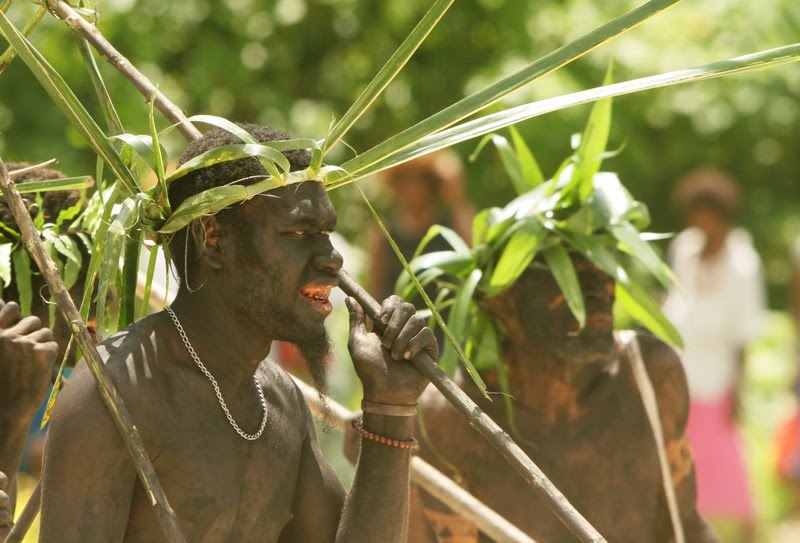
The ghostly group approached us timidly, looking curiously in all directions. Mainly young men and a couple of boys, all smeared head-to-toe in lurid orange mud, they scanned the bushes, the tree tops and the tall grass. Clearly in fear of being observed, they moved cautiously as if any or every movement would betray them.

While these orange interlopers patrolled the gathering, women and men in traditional village attire danced and chanted energetically. The women, in particular, cavorted in a way that would have the missionaries covering their eyes and rushing for their bibles. Their hands firmly on their hips, they gyrated unambiguously, throwing their heads back in mirth.

But it wasn’t long before the orange mudmen’s imagined bogeymen materialised. Slim, lithesome and painted as black as the proverbial, their mouths were bright crimson as if full of fresh blood. They stalked the citrus-coloured troupe, snarling and mocking the orange men with menacing, wide-mouthed laughs and jabbing long, sharp spears. Forced into a terrified huddle, they ducked and dodged the increasingly nasty thrusts.

The scenario played out for a just a few minutes and our alarm grew as the younger ones clung nervously to the quivering legs of the elders, but the finale was approaching and the assembled local villagers cat-calling and laughter grew more enthusiastic as the bewildered mudmen scurried off into the bush at the point of a lance.

The final act played out, the entire cast reassembled for a curtain call and our cameras clicked furiously. Those without cameras applauded appreciatively.

Here on Santa Ana Island in the eastern province of Makira Ulawa, the ancient traditions are preserved and gleefully recreated for the occasional tourist group. The significance of this performance is explained as a representation of the arrival of foreign people and their disruption of local custom. There is some dispute however whether the new arrivals are Europeans or Polynesians. I imagine they’re interchangeable.

Santa Ana is one of several outlying islands that maintain strong cultural traditions, as much for themselves as a marketable commodity for visitors. Either way, all parties are winners and our visiting group display great interest in the multitude of artefacts and handicrafts set out for perusal.

The islands in the immediate vicinity are theorised to have been first settled by the ubiquitous Lapita people around the time the Romans were getting underway in Europe. Scattering their trademark pottery throughout the Pacific, anthropologists still debate the actual migration route, but it is generally believed to have been from the west and dependant on the sea levels current at the time.

At the Busu Cultural Village on Alite Island in Malatia Province, the centuries-old tradition of shell jewellery and currency has its home - a kind of shell mint Again we are met by energetic dancers, although instead of mud, coral and animal teeth, these handsome performers are draped in intricate shell ornaments.

Certainly the most prominent example of shell currency is in the payment of bride price and to illustrate this ritual, a nervous young girl clings to her booty clad in a veil of tiny shells painstakingly woven together to form calciferous garments. She doesn’t appear too pleased at the drawn out ceremony and I must assume she’ll be more enthusiastic when the real day arrives.

The men of Busu Village adopt a decidedly threatening pose. Their job is to protect the women during any exchange or barter that involves transactions of the shell currency which they produce laboriously in the huts behind. Weapons and the skills required to use them are displayed, just in case we get any ideas.

The most significant confrontations and combat synonymous with the Solomon Islands are the furious and bloody battles fought between the Allied and invading Japanese forces during the Second World War. Some of the most ferocious fighting took place around the capital, Honiara, on the island of Guadalcanal throughout 1943.

The war history of the Solomon Islands would easily occupy several articles and the history of the campaign and the many relics, wrecks and material left behind continues to attract amateur historians and sightseers. Overgrown and abandoned tanks, crashed aircraft, sunken vessels of all types and forlorn fortifications draw curious visitors all year around.

Many of the most interesting artefacts are below the waterline, particularly around the island of Gizo (also sometimes spelled Ghizo) in the Western Province. Local dive operator, Danny Kennedy, regales us with wartime tales, particularly his favourite one, that of his namesake President, which took place not far from his little shop in the township.

While patrolling nearby Blackett Strait in August 1943, the President-to-be was in command of PT-109 when it was cut in two by a speeding Japanese destroyer in the middle of the night. The surviving crew swam to what was then Plum Pudding Island before finally being rescued thanks to heroic efforts by two local village boys. The island is now named Kennedy Island.

Danny regularly takes divers to visit his catalogue of dive sites that includes both natural and manmade attractions. Fighter aircraft and various shipwrecks make up most of the program, but the Toa Maru, lying virtually intact in just a few metres of water is the piece de resistance. At 7000 tons, the Toa Maru is possibly the largest, best preserved and divable wreck in the Pacific.

The best way to travel the many islands that make up the Solomons is by small ship expedition. The experience of arriving by ship is hard to surpass as each arrival is usually accompanied by a flotilla of local canoes decorated with flowers and costumed “warriors”. Coral Princess Cruises’s flagship, Oceanic Discoverer, is now a familiar sight in Melanesian waters as she completes her itineraries between Papua New Guinea and Auckland.

Like its neighbours Vanuatu and Papua New Guinea, the Solomon Islands share the natural hospitality and friendliness of its Melanesian population while offering greater depth and richness to the entire region thanks to its many natural and human attractions.

Getting There:

Fly Solomons

Cruising:

For information about small ship expeditions throughout the Solomon Islands and Melanesia, contact Coral Princess Cruises [www.coralprincess.com.au]

Seattle Surprise


A late starter in the cruising stakes, Seattle is more than making up for it with a visitor-friendly persona and weekly cruises to Alaska and beyond.

Words and pictures: Roderick Eime


“Chop its head off!” “Cut out its guts!” and a lifeless carcass is hurled through the air. No, this is not some sadistic pirate ritual, nor some bizarre black magic chant, it’s the Pike Place Fish Market, one of Seattle’s most talked-about tourist experiences.

The market came about in 1907 when consumers, up in arms at skyrocketing produce prices, turned directly to farmers to eliminate profiteering middlemen and created the Pike Place area as the meeting place. Over one hundred years, the market has grown beyond its original trading mandate, survived several demolition orders and become a tourist attraction in its own right.

Customers order their fish from the ice tables in the front of the stall, the order is called out and the entire fish is tossed to the packer behind the counter who wraps it for the customer. This theatrical procedure draws delighted crowds and there’s plenty of audience participation.

Along the lines of many similar developments at the world’s most cruise-friendly cities, Seattle’s waterfront has evolved to service and entertain the thousands of cruise travellers who pass through the port each season. Yet despite Seattle’s long maritime history, cruise travellers have only recently visited the city of three million inhabitants in any measurable number.

In the mid-1990s, the old Pier 66 was demolished to make way for a brand new Bell Street cruise terminal directly adjacent Pike Place Market in anticipation of the growth in cruise tourism. The optimism was a bit premature and cruise passenger numbers have only grown since 2000 when just six vessels and 6000 passengers used the terminal. In 2005, the new Pier 91 facility at Smith Cove was brought online to accommodate the new superliners and annual numbers now regularly exceed 800,000 passengers and 200 sailings.

Seattle is becoming the jump-off port of choice for US passengers travelling to the neighbouring US state of Alaska, bypassing the traditional port of Vancouver, Canada. Currently Celebrity, HAL, NCL, Princess and RCCL home port 11 vessels there, with Celebrity and HAL using the more conveniently located Bell Street Pier Cruise Terminal at Pier 66.

Once onshore, passengers can enjoy an enormous range of sights and attractions. In the immediate vicinity of Pier 66 is the Seattle Aquarium and a bevy of novelty and curio businesses in and around the Pike Place complex including Ye Olde Curiosity Shop and the original Starbucks Coffee Company store. If you have time to wander beyond the pier precinct, there’s plenty to see just strolling the interesting streets. Shopping, dining and drinking are attractions in themselves throughout Seattle and there’s never a shortage of boutique beers like Rogue Dead Guy and Arrogant Bastard Ale at Vons Roasthouse or gourmet coffee at scores of cafes besides the ubiquitous Starbucks.

Head up Pine Street to the classic monorail station where the 1960s-era electric tramway still transports visitors from downtown to the Seattle Center, site of the 1962 Worlds Fair and Century 21 Exposition. The centrepiece of this historic area is the Space Needle, a futuristic tower that is now the signature landmark of this forward-facing city. Aim for sunset for best effect.

If you are embarking or disembarking your cruise in Seattle, the strong advice is to arrive early or stay on to fully enjoy the attractions outside the immediate CBD. Seattle has some superb hotels within a stroll from harbourside like SLH’s trendy Hotel Ändra and the historic boutique property, The Mayflower Park. All the major names are represented too, but it’s these unique, standalone establishments that define Seattle.

Public transport throughout the city centre is free and very reasonable outside that with bus, trolley and a brand new light rail opened in July.

Seattle’s aviation heritage makes it something of a mecca for aircraft buffs with the iconic Boeing Company’s first factory opened there in 1916. There are two sites which must be seen; the sprawling Boeing factory and Future of Flight Aviation Center north of the city, and the Museum of Flight at the old Boeing field to the south. The latter is a magnificent museum with a staggering array of aircraft from every era of flight, while the former includes a tour of the modern Boeing manufacturing facility where you can see the new 787 Dreamliners rolling off the line.

Even a stay of three or four days will leave you wanting for more, so if you plan to spend that amount of time at each end of your seven day cruise, you’ll be assured of complete exploration of this fascinating and futuristic city with a healthy respect for tradition and history.

Space prevents detailing every conceivable option, but consider these;
  • Take a Victoria Clipper fast ferry to Victoria, BC if you missed Canada elsewhere.
  • Savour a bowl of clam chowder at any of the signature waterfront restaurants
  • Visit the 92-acre, animal friendly Woodland Park Zoo with over 1000 animals in a botanic park-like setting.
  • City museums include the Seattle Art Museum and its companion outdoor sculpture park, Burke Museum of Natural History and Culture and the Experience Music Project, dedicated to Seattle’s vibrant music culture and history.
  • Ride a hand-operated 1914-era elevator to the top of Smith Tower for a superb view of the waterfront
  • Take a Duck Tour in a WWII-era amphibious landing craft
  • If on an extended tour, consider a backcountry excursion to Mt St Helens or a river cruise along the Columbia
  • Purchase a Go Seattle™ Card. This multi-attraction pass gives you access to over 30 attractions including the Space Needle and lots of museums.
Seattle is a city where Australians will feel comfortable and at ease. Navigable streets, a sensible transport system, friendly people, great dining and entertainment options, enriching sightseeing and a modern, environmentally responsible outlook that makes for a relaxing and rewarding experience.

Getting There:

Cruise lines visiting Seattle include;

Celebrity, HAL, NCL, Princess and RCCL, Cruise West, American Safari Cruises, Fantasy Cruises. Plus numerous day and charter operators like Argosy and Victoria Clipper

Cruise Season: April to October

Official tourism site: www.visitseattle.org

Sailing Schedules:
www.portseattle.org

Airlines serving Seattle:

AirTran Airways American Airlines Frontier Airlines JetBlue Airways Midwest Airlines US Airways Virgin America Continental Airlines Hawaiian Airlines Horizon Air Southwest Airlines Air Canada Air Canada Jazz Alaska Airlines United Airlines United Express operated by SkyWest Airlines Aeroméxico Air France Asiana Airlines British Airways Delta Air Lines Delta Connection operated by SkyWest Airlines EVA Air Hainan Airlines Horizon Air Icelandair Korean Air Lufthansa Northwest Airlines Sun Country Airlines

Burnie: Gateway to Tasmania’s Wild NorthWest


Beyond the Ramparts of the Unknown

By Roderick Eime

Flying into the tiny north-western regional hub of Wynyard, you could easily imagine you are in the middle of nowhere – and that is why so many visitors come!

With a heritage that can be traced back to the early 19th Century, this far flung Van Diemen’s Land outpost was referred to in King George IV’s Royal Charter as “a huge tract of unsettled land, beyond the ramparts of the unknown.”

An easy 20 kilometre coastal drive from the working town of Burnie and a further 50 kilometres to Tasmania’s third largest city and Spirit of Tasmania ferry port, Devonport, Wynyard is perfectly placed to springboard nature lovers into the world-famous wilderness areas along the north and west coasts.

Before heading off into the wild, swing by Burnie and see why it is shaking off the outdated industrial character that has defined it for so long. At the Lactos Cheese Tasting and Sales Centre you can sample fine cheeses, including major brands Tasmanian Heritage, Mersey Valley and Australian Gold. Premium food produce is fast becoming a Tasmanian specialty and you’ll find Australia’s largest single malt whisky distillery in Burnie. Hellyers Road Distillery makes fine, single malt whisky distilled from Tasmanian grown malted barley and famously pure Tasmanian rainwater. The distillery also produces the Southern Lights brand premium grain vodka. If you’re visiting in winter, this stop-off is almost mandatory.

For a fortifying meal of local fresh seafood, visit Fish Frenzy located on the waterfront in Burnie. Tasting Tasmania author, Graeme Phillips, describes it as a “bright and spacious modern café with fresh fish and seafood every which way and then some.”

Eventually the lure of the renowned Tasmanian wilderness will beckon you but the “clarion call” will come from many directions.

Most will yield to the irresistible allure of the UNESCO World Heritage Cradle Mountain Lake St Clair National Park, a mere 70 kilometres drive. From the swank Voyages Cradle Mountain Lodge to modest hiking cabins, the options are plentiful.

The raw appeal of the Tasmanian mountainscape has captured the imagination of visitors for decades and none more so than pioneering outdoorsman, Austrian-born Gustav Weindorfer, who built a rough chalet next to the iconic Dove Lake in 1912.

Weindorfer is revered as the “founder” of Cradle Mountain wilderness recreation and is fondly remembered as an eccentric, idealistic yet jovial man who would host guests with generous lashings of his garlic and badger (wombat) stew.

“A mixture that would kill me in five minutes,” recalled local Bill Perkins in a eulogy to the colourful Austrian in 1982. Perkins first met Weindorfer in 1930, just before his death. Today you can see an authentic replica of Weindorfer’s cottage and outbuildings and get a feel for how people enjoyed the country almost one hundred years ago.

If you do nothing else, be sure to complete the Dove Lake circuit, a relaxed two hour dawdle around this imposing feature that is one of Australia’s most instantly recognisable vistas next to Uluru and Sydney’s Harbour Bridge.

If you really want to earn your “Wild Tasmania” badge, head north west from Wynyard into the Tarkine Forest region (the largest temperate rainforest in Australia) and plot a circuit via Stanley, Smithton, Corinna, Zeehan and Strahan. Get lost in the oblivion of true wilderness, a commodity that is fast disappearing in our shrinking, globalised world.

The intriguingly-named Dismal Swamp is a natural blackwood forest sinkhole, believed to be the only one of its kind in the world. Thirty minutes (40km) south west of Smithton, the visitors’ centre showcases Tasmanian specialty timbers with a contemporary interior crafted from blackwood and Tasmanian oak. From there the walkway descends to the floor of the sinkhole, or if you’re game take the exhilarating 110m slide from the viewing platform to the swamp floor. There’s an electric buggy option too.

Proclaimed by Bass and Flinders in 1798, historic Stanley is a delightfully sleepy hamlet distinguished by its characteristic, 150m high “nut”, a long extinct volcanic plug that forms an imposing natural citadel overlooking the town. Take the chairlift or walk to the top for panoramic views of Bass Strait.

The nearby Highfield Historic Site epitomises the optimistic early settlement and is the site of land granted to the Van Diemens Land Company (VDL) in 1824. The homestead is a rare example of the elegant Regency period. Edward Curr, the chief agent of the VDL, started construction in 1832, and later additions were made by John Lee Archer, the colony's first important architect. The harsh life reaped a toll on the residents, particularly the convict labourers and there are many stories of ghosts still wandering the dark corridors including that of Curr’s infant daughter killed in an accident. She has been known to tug on the skirts of women visiting the property. If you dare, take the popular night-time ghost tour.

From Smithton, it’s a two hour drive to the remote village of Corinna, a former gold mining town settled in 1881. Today the entire village is a self-catering, eco-wilderness experience with authentic miner’s cottage accommodation, a totally refurbished hotel and river cruises aboard Arcadia II, a magnificent Huon pine river vessel. Kayaking, walking, fishing, bird watching and nature experiences are some of the activities available to guests.

A further 100 kilometres via Zeehan is Strahan, a once thriving lumber town, now a picturesque bayside site overlooking gorgeous Macquarie Harbour. Before Strahan, there was Sarah Island located within the harbour and reputably the worst penal colony in the land. The ruins are still there and "is remembered only as a place of degradation, depravity and woe." (Rev. John West, anti-transportation activist and publisher, 1842). Local historian and author, Richard Davey, conducts semi-theatrical lamplight tours of the island and he almost channels the spirits of the long-dead convicts as you survey the scattered brickwork that once served as shelter for the wretched men. He’ll tell you glee the tale of the men who escaped from the island and turned cannibal and those who seized a boat they built themselves and were eventually arrested in South America.

Complete your experience with a day cruise on the harbour and into the now legendary Gordon River or take the historic steam train to Queenstown, one of the most significant such journeys in the country.

Where to Stay:

Luxury: Voyages Cradle Mountain Lodge
“showcases the best Cradle Mountain has to offer”
1300 134 044

Motel: Best Western Murchison Lodge, Burnie
“Your base for a North Western experience”
03 6435 1106

Wilderness: Corinna Cottages
“an oasis in the heart of the Tarkine”
03 6446 1170

B&B: Sealers Cove Restaurant and Accommodation
“well-appointed, comfortable and homely”
03 6458 1414

Must-do, Must-see Checklist:

• Lactos Cheese Factory, Burnie
http://www.lactos.com.au
• Dismal Swamp, near Smithton
http://www.dismalswamp.com.au/
• Corinna Wilderness Experiences
www.corinna.com.au
• Strahan Experiences
www.strahan.com.au
• Highfield Historic Site, Stanley
http://www.historic-highfield.com.au/
• Hellyers Road Distillery, Burnie
http://www.hellyersroaddistillery.com/

Food and Wine:
Visit Graeme Phillips’s comprehensive and authoritative website:
www.tastingtasmania.com

Getting There
Regional Express flies six times each day from Burnie to Melbourne
www.rex.com.au

For more details on all Tasmania has to offer, visit the official site:
www.discovertasmania.com

Selling Out – Is franchising the new model for hotels in tougher times?


What do sewing machines, cola, hamburgers and motor cars have in common? Answer: They made their success through franchising.


True. In 1856, when Isaac Merritt Singer needed to expand his sewing machine empire, his funds were exhausted from messy legal action over control of patents. Instead of paying his salesmen salaries to sell the new mass-produced device, he sold the rights to territories for which the owner (franchisee) paid a commission to Singer for each sale. Thus the modern concept of franchising was born.

Hamburger chains, automotive dealerships, soft drink bottlers and hotels followed suit and some the greatest brands in corporate history were born.

Hotels and accommodation chains took off after World War II, particularly in the USA. But like so many other franchise operations around this time, they suffered from lack of regulation. In 1979, the US Federal Trade Commission was given authority over franchising (Rule 436) and the market settled to allow familiar and reliable brands to flourish.

It wasn’t until the 1970s that franchising made serious inroads into Australia when the US fast food chains KFC, McDonalds and Pizza Hut landed – some would say invaded. Yet today, these brands are as much a part of Australian life as kangaroos, meat pies and … well, you know the rest.

In 2008, the Franchise Council of Australia (FCA) estimates 63,500 business format franchised units now operate together with 7,900 company-owned units, producing a total of 71,400 units in business format franchise systems. Approximately 8000 fuel retail outlets and 2500 motor vehicle retail outlets exist with around 413,500 persons employed in business format franchise systems. Growth of franchise operations for the last two years was almost 15 per cent.

Homegrown Success


One of the most successful franchise stories in Australia is the phenomenon of Gloria Jean’s Coffees. Australian owned and locally operated since 2004, the company now holds the international master franchise brand and roasting rights globally and currently has agreements to operate in around 50 countries.

The company has won multiple franchise awards and continues to grow at about 20 per cent annually in Australia and has opened 915 stores and signed 36 Master Franchise agreements across 35 countries worldwide.

To export a franchise model is rare as the vast majority of cases involve the arrival of brands to our shores as is the case for hotel and motel chains.

One example of domestic brand success is the 100 per cent Australian-owned Quest Apartments who have progressively moved to a franchise-dominated model since beginning to 1988.

“It was clear that company-owned properties were not performing. They lagged significantly behind the performance of franchised properties and generally sapped human resources and drained working capital,” says Nick Suriano, General Manager-Franchising, “and since our change of strategy in 2002 to franchise, we’ve seen average franchisee profits grow by 50 per cent over the last four years.”

Suriano also notes that 85 per cent of current investors are hungry for more action within the brand and that on average, 13 qualified applications are received for each opportunity. Despite the current overall downturn, Quest’s growth strategy is still on track and the brand hopes to add ten new properties each year.

Franchising not for everyone


However, for every franchise success, there seems to be at least an equal number of horror stories, indicating that franchises should not be undertaken lightly and the franchise model is anything but one-size-fits-all. A recent case just concluded by the ACCC left several former bakers anything but delighted when the Commission found in favour of the franchisor.

The commonest complaint against franchisors concerns the practice of “churning”, where franchises are repeatedly sold, reacquired, then resold in territories known for failures. Franchisors cite poor management, ineptitude or a refusal to follow the franchisor's business model as reasons while franchisees claim collusion, intimidation and withdrawal of support.

Todd Wynne-Parry, Director of Development Australia, New Zealand, South Pacific for IHG, claimed to be “the world's largest hotel company” (by number of rooms), urges caution.

“IHG believes the management option still provides the best path for all parties. Finding a franchise brand that will deliver the additional income required to service the agreement is difficult in all but a few circumstances.”

A large portion of IHG’s US network – particularly its Holiday Inn hotels – are franchised, however the majority of its Australian properties operate under management contracts. Wynne-Parry cites Holiday Inn Rooty Hill and Crowne Plaza Pelican Shores as two properties that successfully leverage their franchise association based on their very specific locations and assets.

NZ’s Heritage Hotel Management operates a mix of Qualmark 4-star owned, managed and franchised properties with majority of properties under management. “With the current economic climate, we anticipate more management arrangements struck with currently independent hotels, as they seek to reduce fixed costs and secure the support of a recognised brand with a consistent product offering,” says COO, Jeff Shearer.

Linda Wells, Franchise Manager with Constellation Hotel Group, an Australian company that owns and operates more than 70 hotels across Australia and New Zealand, agrees that some franchise models are too expensive and restrictive.

“Owners fearful of inflexible, high royalty franchise deals should probably test the market for other options, something flexible and pay-for-performance in nature,” advises Wells, “Some hotels want a huge amount of input from their group, but some just want a sign, a loyalty program and a webpage. Those operators can get a simple brand license that allows them to do just that – forget about the branded tea bags and sugar sachets!”

Franchising in the new economic climate


In the space of less than twelve months, the world economies are in turmoil. Banks, brands and borrowers of all types are floundering and the security and safety of known quantities are being questioned.

FCA Executive Director Steve Wright believes there is optimism in the franchising sector, which has a history of faring better in tough times, relative to other small businesses.

"There is a resilience in the strength of the franchise brand, the franchise support network and the bulk buying and marketing capability of franchise systems.

"We believe there is significant pent-up demand for franchise business expansion which has been hampered by the employment boom in the past few years. Franchising now has something very attractive to offer the economy in that it can provide a self-employed solution for entrepreneurial people displaced by corporate redundancies and otherwise finding it difficult to get another PAYE job. This has the double benefit of increasing production output and reducing unemployment."

Wright’s sentiments are shared by General Manager Accor Franchise Hotels, Dino Mezzatesta.

“If ever there was a right time to franchise, it’s now. Incoming enquiries are flooding in like never before as people realise that in tougher times they can’t do it on their own,” says Mezzatesta, “Leveraging the brand strength and purchasing power of a global name is a definite asset in this climate.”

David Bayes, CEO, Choice Hotels Australasia, concurs. “We’re not immune to the global economic climate but many properties are deciding they would be better off aligning with one of our global brands to access the benefits of dedicated field support, service, market segmentation, global alliances and partnerships, global reservations services and the sales and marketing force that Choice Hotels offers.

“It can be lonely running an independent accommodation business. In an increasingly complex and electronic world our franchisees gain great support from networking and common solutions and an alignment with a strong strategic direction supported by equally strong tactical solutions. The case for franchising is strong in the best of times – it’s even stronger in uncertain times!”

On the matter of “uncertain times”, Mr. Robert Anderson, CEO, Best Western Australasia, believes adversity can open doors.

“Opportunity can also be found in times of crisis. Consumers tend to favour mid-market hotel brands when economic conditions tighten. Last year Best Western bookings increased by 8.5 per cent over the previous year, the majority of these through our own Best Western website,” says Anderson.

“It is also in times like these that we can best assist our members. We are working even harder to maintain our increase in bookings and to ensure our members (property owners) come out of this economic situation favourably. We have increased all our marketing activities, re-launched our new-look loyalty program and implemented new industry-leading training courses that maximise our members’ skills and property revenue. “

Making the franchise decision


The Franchise Council of Australia advises prospective franchisees that with any business there are risks involved but they are reduced if you research effectively.

The FCA warns that buying a franchise is a major decision and that the commitment in capital and borrowings can be significant. Any new entry needs to consider the process very carefully, remembering that franchising is not a guarantee for success, rather an opportunity to establish a healthy rewarding business with the support of a network focused on success. Such a franchise is an example of true synergy where “the whole is greater than the sum of its individual parts.”

FCA Website: www.franchise.org.au

City Tour with the Star of Phnom Penh

In most cities if you go on a movie star tour you'll travel in a minibus with some dilettante chatterbox who'll drive you past the gates of celebrity homes and favourite restaurants, but in the rapidly recovering Cambodian capital of Phnom Penh, you can actually go on a tour conducted by a genuine local movie star.


Talk about rags to riches. Sereyvath Kem, or just Srah to his mates, was standing on the corner touting for taxis when a movie crew came looking for some extras. Srah was chosen from a bunch of clamouring hopefuls to play the role of Sok, a local taxi driver in the film “City of Ghosts”. Directed by and starring Hollywood heartthrob, Matt Dillon along with James Caan and Gérard Depardieu

If you're travelling to Phnom Penh, go rent this movie first. Sure, the plot is a bit patchy but the casting, art direction and locations are genuine Phnom Penh. The proud, but crumbling French architecture, dusty streets and hurly burly is still intact some eight years after the movie was shot.

I found Srah by tracking backwards from another local cast into the plot, Michael Hayes, an ex-pat American with no idea about newspapers who lobbed there in 1991 to start the Phmon Penh Post. Hayes, still the editor-in-chief, put me in touch with a shady-sounding character, Hurley Scroggins, who runs a well known little Mexican (yes, Mexican) restaurant a few doors down from the famous Foreign Correspondents Club.

“So you're looking for Srah,” asks Hurley with a far-away sort of look, but picks up the cell phone all the same. “Srah, hi, yeah, there's this journo here from – where was it? - Australia wants to chat.”

So the next morning, Srah turns up on his moped, loads me on the back and runs me around Phnom Penh showing me the locations and reciting his lines.

“Here's the spot where Matt gets beaten up and I pick him up and take him to the hospital.”

This is great fun, but I'm more interested in Srah and his story.

Bright eyed, communicative and polite, Srah is now a healthy-looking 43 with a wife and two beautiful young children. He shows me the photos. But like so many Cambodians trying to create lives for themselves, there's the unavoidable history of the Khmer Rouge from the mid-1970s.

Srah's father, a doctor, was high on the target list for the despotic regime who sought to erase Cambodia's history, especially the academics and educated class. They managed to avoid detection for a couple years, but eventually Srah's father was arrested. The family disintegrated and Srah and his brother ended up in an orphanage for 10 years before he returned to Phnom Penh in 1990 looking for work. A stint with the military and later, the UN, taught Srah some international relations and languages.

For the rest of the morning, we tour around the streets with me hanging on the back of his moped. This is the real Phnom Penh, not some sanitised, air-conditioned tour bus with crisp-shirted guides and bottled water. As we visit more movie locations and I can't resist the urge to recreate one of the iconic shots with Dillon in the front of the cyclo-cab. But first we have to hire a cyclo. Ironically Srah has never owned or worked with a cyclo and had to learn to ride one for his role.

Thanks to the proceeds from Dillon's film and an on-going trickle of movie work, Srah now owns a flat for his family and a shiny Toyota for high-end work. He still conducts tours around the city and even out into the rural countryside for those who want to see more through the eyes of a local.

“City of Ghosts” was never a box office blockbuster and Dillon never meant it that way. Instead it's a gritty 'art house' adventure thriller with a sympathetic view of the the ordinary Cambodians struggling to make ends meet in a chaotic city. Critics were split, but the harshest criticism seems to come from those who've never been anywhere near Cambodia. They called it patronising and dehumanising, but Srah defends it.

“Movies must sometimes tell people the truth, this is the way Cambodia is.”

If you're looking for a tour with an interesting local twist, you can contact Srah for a reasonably priced, customised itinerary by e-mailing mrsoksrash@hotmail.com


Vietnam Airlines serves Phnom Penh three times per day from Ho Chi Minh City (Saigon) and offers daily non-stop flights from Australia departing from both Sydney and Melbourne four times per week. See: www.vietnamair.com.vn or call 1300 888028 for reservations.

Australia and New Zealand Luxury Lodges and Resorts

From Luxury Lodges

Updated October 2008: South Island New Zealand - Select Hotels
Updated November 2008: SLH Blanket Bay
Updated November 2008: Pure Tasmania/Federal Group

Over the past three years, Rod (sometimes with 'Mrs Travel Writer') has visited a wide range of New Zealand's world famous luxury and exclusive lodges.

(see comprehensive spreadsheet)

Names like Huka Lodge, Grasmere and Blanket Bay feature prominently, while Rod has also visited the brand new Select Braemar Lodge at Hanmer Springs and sampled the delights of recently opened Otahuna Lodge near Christchurch.

In Australia, the list grows with visits and stays at El Questro, Arajilla, Spicers Peak, Hidden Vale, Bloomfield Lodge, Lilianfels, Q Station and more.

Features are written to commission only, so please contact me to discuss your publication's individual requirements.

A New Light on the Old West

When we think of cowboys and indians, it's all too easy to recall those gun-toting heroes of the old west purging the dusty plains of trouble-making savages, dodging arrows and riding off into the sunset. If there was ever a tired old cliché, that has to be it.

It may also seem unusual that a small ship or adventure cruise could bring you close to this part of the world, but Cruise West's Northwest Passage itinerary delivers you into the midst of Oregon Country, the scene for its own particular brand of frontier spirit. Our vessel, Spirit of '98, carries 100 passengers up the vast Columbia River toward the lesser tributaries of the Snake, Umatilla and Walla Walla Rivers, all the while retracing the paths of early explorers like Lewis and Clarke and recounting their interactions with the local tribes.

My first encounter with native American culture was meeting the elderly father of my tour host in Wrangell, Alaska. A respected tribal elder of the regional First Nation tribe [Tlingit] or as they were once called, Eskimos. I learned about their strong connection with the land, hunting traditions and resilient family structures. I also couldn't help but notice the many parallels with our own indigenous cultures' experiences with European settlers.

This once isolated NW corner of America has been something of an anomaly in the country's development and expansion. After the controversial Louisiana land purchase at the very beginning of the 19th Century, the US Government under Jefferson, formed the Corps of Discovery to find out just what they'd got themselves into. Two young military officers, Meriwether Lewis and William Clark, were chosen to command the motley crew and find a path to the Pacific.

The journey of this intrepid pair and their cohorts is taught to every American school kid from year one onwards. Often downplayed in the telling is the significance of the American Indian tribes in their ultimate success. In particular a young native woman recorded as Sacagawea, often led the party through some of their most difficult moments and certainly helped smooth their passage through tribal lands.

Consequently, thanks to the skill of native interpreters and the benevolence of the tribes, Lewis and Clark were able to complete their mission and open the gates for western migration. The rest of the story for the tribes does not have such a happy ending. Thanks to some double-dealing by the newcomers and diseases like smallpox and malaria, the native tribes suffered enormously. Any lingering disputes were resolved at the point of a gun.

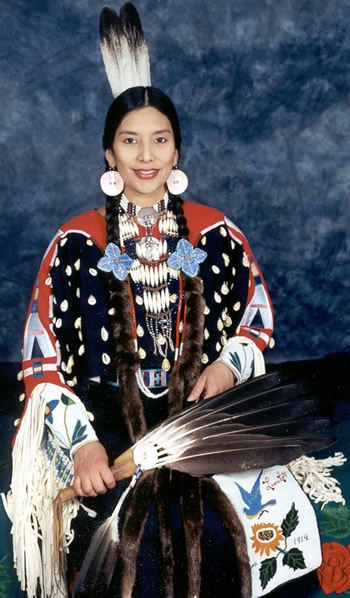
The strength and integrity of these people who populated the land some ten thousand years before the European arrival was demonstrated to me in just a few minutes when local Nez Perce arts council chairperson, Angel Sobotta, came aboard for a short talk. She spoke with such eloquence and elegant authority that the small audience was transfixed. We learned as much about her pride in her significant ancestors as her little family and young children. Even though she must have given this talk many times, her voice still quivered at the mention of her late grandparents that helped her recover and preserve the endangered traditions. Her message was clearly one of peace and reconciliation, and not just for her people alone, but for all the planet.

This retelling may sound emotive and melodramatic, but when travel companies talk about the now proverbial “transformational and experiential” products sought out by the new wave of adventure travellers, it's hard to imagine something more effective and genuine than these encounters.

Fact File:

Established over 60 years ago by founder, Chuck West, the company that bears his name is one of the most ambitious adventure cruise lines around. Beginning in Alaska, Cruise West now offers itineraries as far afield as in Japan, Mexico, Antarctica and the Galapagos. The Seattle-based line just announced its most comprehensive sailing yet; the Voyages of the Great Explorers, a 335-day circumnavigation of the world.

Cruise West offers three variations within its Columbia and Snake River products, each visiting a different mix of natural and man-made sights.

The Northwest Passage is seven nights and eight days Portland to Portland. Prices begin at US$2999 per person which covers taxes / port charges / fees and onboard services.

Bookings can be made with any travel agent through a network of local sales representatives.

For a comprehensive catalogue, see www.cruisewest.com

Ship Details:

Vessel: Spirit of '98

Cruise Line: Cruise West

Star rating: 3 Stars

Max Passenger Capacity: 96

Entered Service: 1984, refurb 1995

Facilities: All cabins have private facilities, some have minibar. Bar/library/lecture room, dining room, sundeck/outdoor dining, exercise machine, Internet, elevator

Getting There: V Australia flies daily to LA from Sydney and now three times per week from Brisbane with easy domestic connections through Virgin Blue. Fares from Australia to Portland start from $1299 return. For full conditions and promo fares, see www.vaustralia.com.au

Samoa: Coming Out of My Shell

Location: Samoa
Visit date: May 2009
1000 words
Author’s images: http://rodeime.fotopic.net/c1695226.html
Stock images also available.
See Samoa on Google Maps

Coming Out of My Shell

Hunted and harassed around the world, have these delicate sea creatures found sanctuary here in Samoa? Roderick Eime delves beneath the waves in search of these enigmatic and delightful animals.

The determined reptile bore down with a single-mindedness only coming from eons of pre-programmed behaviour. This ancient sea creature pursued me with just one thing on its mind, and with the scent of food in its nostrils, wasn’t about to let me get away.

“Oh, give it to him for heaven’s sake,” came the plea from Gardenia, my otherwise patient Samoan guide, and with that I relented and released the fragment of pawpaw into the water. Within seconds Crush’s ravenous jaws were munching contentedly on the bright yellow chunk of fruit.

Sea Turtles, in this case Green Turtles, are about the most serene and kindly-looking animals anywhere on the planet. Most times anywhere else, you’d be jumping out of your skin at the rare sight of one, yet here among the Samoan islands the delightful critters abound.

Crush is my name for the largest turtle here in the pool at the little village of Satoalepai on the far north coast of Savai’i, the largest and northernmost of the two Samoan mainlands. The local family sell tickets to tourists and visitors for ST$5 (about A$2.50) and you are supplied with all the ripe pawpaw the turtles can eat and all the time you want to swim and canoodle with the lovable creatures. I’m told the juvenile turtles here are coaxed from fishermen for a few tala and allowed to grow to maturity before release. But the story varies depending on who you ask. Either way, the dozen or so current residents are in good shape with plenty of room in clean water.

As an amateur SCUBA diver, I also enjoyed a few dives in the crystal clear waters here on the very edge of the South Pacific. Each dive yielded at least one turtle encounter with one underwater exploration near the far eastern tip of Upolu (the other island) delivering eight turtles including the biggest damn Greenie I’ve ever seen. The 200kg monster crept out from under a ledge as I swam past, scared the daylights out of me and nonchalantly swam off.

Most of the world’s turtles are on the World Conservation Union (IUCN) endangered species list as a result of over-fishing, deadly driftnets and environmental degradation, particularly to feeding and nesting grounds. In spite of a US National Park Service assessment that places the animals in regional decline, my own unscientific observations would beg to differ. In the lagoon at Fagamalo I was even treated to the gold medal sighting of a critically endangered Hawksbill Turtle grazing unperturbed on algae at about 10m as I photographed it from every angle possible.

“She’s there most times we dive,” says Fabien Lebon, the expert dive guide on Savai’i, “ ‘bonjour Fabien’ she says ‘so just one diver today, oh okay’ and keeps eating. My daughter calls her Vanessa.”

In Samoa the animals have some nominal protection thanks to their mythical status as a saviour of lost seamen. The local name “I'a sa,” translates directly as “sacred fish”. Then there’s the old Samoan legend of the turtle and the shark which recalls unhappy Fonuea, an elderly blind villager, who cast herself and her daughter Salofa into the ocean to be reborn as sea creatures away from the unkind hands of humans.

"Lalelei!, Lalelei!, Lalelei!" the villagers still cry coaxing the pair to reappear at the foot of the cliff. But don’t point or they will immediately disappear, reminded of the cruel treatment that caused their despair.

When caught, turtles weep profusely and this sometimes engenders enough sympathy to throw them back to the sea instead of on the fire. True, despite both legend and legislation, turtles are still caught for food, although much less so in Samoa than other islands such as Fiji where they are gathered and slaughtered live in the Suva markets to the horror of onlookers.

Samoa challenges any writer to avoid the common clichés of “hidden gem”, “best kept secret” or “tropical paradise” precisely because it matches them all exactly. The great novelist, Robert Louis Stevenson, sought refuge and inspiration here in his final years and is laid to rest overlooking Apia.


Remote and almost unattainable, Samoa lies at the limit of most regional airlines’ reach, while conveniently avoiding mention in most tourist texts dominated by closer cousins Fiji, New Caledonia and Vanuatu. Samoa’s lack of pervasive tourism infrastructure is a key selling point. The relatively few resorts are low impact, relaxed and uncrowded. Vigorous touts, tacky tourist haunts and Chinese-made souvenirs are rare, leaving most attractions to the native ingenuity of the locals.

P&O Cruises have rediscovered Samoa thanks to its cruise-friendly port (Apia), engaging excursions, rich culture and relaxed atmosphere and have doubled their scheduled visitations over the next year. Elite surfers and committed sports divers too have jealously kept Samoa under their beanies for years.

For me, I’d be happy if Samoa retained its seclusion, cherished its low profile and remained ambivalent about the growing interest in its natural and scenic treasures. But that won’t happen in a world crying out for new experiences and destinations far from the madding crowd. Please, if you go, tread lightly, be polite and don’t hassle the turtles.

Doing it:

The Samoa Tourist Authority has a wide range of travel, tour and accommodation options to suit all budgets. Visit their website at www.samoa.travel

Getting There:

Polynesian Blue, International Airline of Virgin Blue flies direct from Sydney to Apia (Samoa) three times a week. Formal connections are also available via Brisbane with fares starting from $429 per person, one way on the net. If you're looking to keep entertained, simply hire the digEplayer. Your own personal in-flight system features movies, TV shows and a board array of of music for an additional $15. For extra leg room, book the Blue Zone seating option for an additional $45 on top of your fare. Check out www.polynesianblue.com for current specials, bookings and all your travel needs.

The writer was a guest of Samoa Tourist Authority and Polynesian Blue.

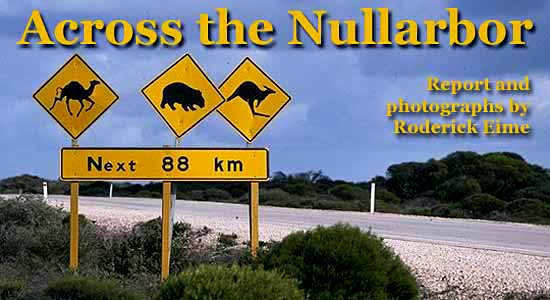
Across the Nullarbor Plain – A Modern Australian Pilgrimage


Commissioned for Tourism Australia Long after the original wanderings of Australia’s indigenous inhabitants, Europeans began to rediscover the vast Australian landscape. These monumental overland treks are now part of white man’s folklore as much for their audacity and bravery as their sheer foolhardiness. In 1861, Burke and Wills staggered north into oblivion while Ludwig Leichhardt vanished in the middle of the country in 1848. However, one Englishman stands out as an accomplished explorer with an enviable, if unusual record of achievement. In 1840, soon after the formation of the colony of South Australia, Edward John Eyre gathered a large party and set out from Adelaide to cross the continent to Western Australia. Unlike Burke and Wills, Eyre recognised the value of Aboriginal guides and many would argue his success was a direct result of their ancient bush skills. Just he and one trusted guide, Wylie, eventually completed the journey after four and a half arduous months. None too impressed, he described the land as "a hideous anomaly, a blot on the face of Nature, the sort of place one gets into in bad dreams". Today, the vast and foreboding Nullarbor Plain (named so because of its lack of trees) is criss-crossed daily by aircraft, trains, coaches, enormous trucks and humble holidaymakers alike. After five years of difficult toil, the Trans-Australian Railway was completed in 1917 creating the first land route between Adelaide and Perth. In the typical short-sightedness of the time, the gauge matched neither at either end of the line, so it wasn’t until 1970 that the entire line was converted to match. The Indian Pacific’s 64 hour transcontinental crossing is now recognised as one of the truly iconic railway journeys of the world. The railway line was still a novelty when, in 1919, Captain (later Air Vice-Marshal) Henry Wrigley flew a flimsy BE2 biplane across the continent. Today, for a few hundred dollars, anyone can travel the entire breadth of the country in jetliner comfort in a matter of hours. Yet even with the oversupply of easy and economical options, many diehard and intrepid travellers choose to traverse the land by road using the national highway that so appropriately bears the name of the first European to do so, Edward John Eyre. The land route is the one that defines this journey, described by some as a pilgrimage, since it examines firsthand some of the hardships and deprivations endured by the tough pioneers who forged the corridor. In 1877, a telegraph line was created between Adelaide and Albany, a feat that mirrored Eyre’s 35 years before and repeater stations were constructed along the route. Many still stand today, while others are crumbling ruins. The former station at Eucla is probably the best known as it appears and disappears again beneath the shifting sands and has been the subject of many moody photographs. Eyre station, near Cocklebiddy, is now the site of a bird observatory and weather station and is occupied year-round. The telegraph line was eventually moved up along the railway in 1927 to avoid the hungry dunes and with the outbreak of the Second World War, the need for reliable roads became imperative. In 1941, a continuous road was built in just six months by 150 men deemed too old for military service. The straight dirt road replaced a series of winding tracks and soon saw increased traffic and as the newly mobile post-war nation went about exploring their country. Breakdowns were frequent and motorists were often stranded for days on end as spare parts gradually caught up with them. In 1976 the highway was sealed end-to-end and the floodgates opened. Travellers, road freight and tourist buses quickly became commonplace on the flash new surface. Road stops expanded, motels appeared and new levels of service gradually sprung up catering to an affluent population eager to enjoy the very wide open spaces. Planning a trip across the Nullarbor is straightforward. Make sure your vehicle is fully checked for roadworthiness; in particular tyres, cooling system, engine and steering. Trips of this length are best shared with two or three drivers and allow four or five days to complete it safely and fully enjoy the many highlights along the way. For example, surfers will be well aware of the locations between Ceduna and Fowlers Bay that are legend amongst board riders. Cactus Beach, a rough twenty kilometres south of Penong, is probably the best known of them all and it is quite common to see the sun-bleached wave hermits camped among the dunes behind the breakers. Land-based whale watching is a unique feature of the South Australia sector. At the Head of Bight (the most Northerly extent of the Great Australian Bight) up to sixty extremely rare southern right whales calf and mate from May until October and are visible from the Twin Rocks Lookout. Sections of the old dirt highway still remain and to truly understand the tribulations facing earlier travellers, why not drive a few kilometres along the dusty path? The spectacular Bunda Cliffs stretching between Nullarbor and the Border Village are without doubt one of the highlights of the journey. These incredible geological features were created some 50 million years ago and are composed of limestone laid down when the Nullarbor Plain was once an ancient seabed. After crossing the Western Australian border the arrow straight road drops down onto the Roe Plains, frequented by Wedge Tailed and Sea Eagles nesting in the nearby cliffs bordering the Hampton Tablelands. Mundrabilla revels in rumours of alien and UFO sightings, but one thing is known for sure. In 1966 one of the most famous meteorite finds were made north of the highway. Continuing the space theme, large, flaming chunks of Skylab plummeted from the heavens in 1979 landing near the ruins of Balladonia station, while beneath the hard, ancient surface extensive limestone caves can be carefully explored. Yet above all, the drive across the Nullarbor is a genuine adventure and for many it is a lifelong ambition. It typifies the most inhospitable country our 19th century pioneers faced and is a mind-boggling reminder that for tens of thousands of years, the resilient indigenous people made this region home, thriving in its scarcity. To challenge – and conquer – the Nullarbor is to live the Australian outback experience. ~~~~~~~~~~~~~~~~~~~~~~~~~~~ Ancient Times Aboriginal presence on the Nullarbor can be traced back as far as the earliest evidence of human settlement. The Pitjantjatjara, whose domain extends as far north as Ulurua are a prominent group, as are the Wangai, who earned respect for assisting early prospectors and miners, especially around the towns of Coolgardie and Kalgoorlie. The whale watching point at Twin Rocks is on Yalata Aboriginal Land and permits are required before venturing off the highway. The community is located near the namesake roadhouse. Fast Facts The Eyre Highway extends from Port Augusta in South Australia to Norseman in Western Australia. Total distance: 1670 kms Best time to drive: May to October when temperatures are mild Did You Know? The first Perth – Adelaide air service began on 26 May 1929 and the original stopover airstrip and hangar at Forrest (FOS) is still in use today by civil and military aircraft. Further Information: South Australia, including Eyre Peninsula Tourist Association www.southaustralia.com Ph: +61 08 8682 4688 Norseman, Western Australia www.norseman.info (08) 9039 1071 Drive Guide www.mynrma.com.au Nullarbor National Park www.environment.sa.gov.au Interesting Accommodation: Fraser Range Station www.fraserrangestation.com.au/

Cool New Auckland


By Roderick Eime


Tamaki-Makau-Rau - ‘the maiden with a hundred lovers’ – may not sound like the most flattering of descriptions, but the Maori have a definite fondness for the region that provides a bounty of seafood in a setting of lush, rolling hills and a temperate climate.

Auckland was named in 1840 by the first Governor, Capt William Hobson after his commanding officer, Lord Auckland. It is the world’s largest Polynesian city with around 63 per cent of residents from European descent. 11 per cent are Maori, 13 per cent Pacific Islander and the growing Asian population is around 12 per cent.

The bustling city may have lost its mantle of political capital to Wellington in 1865, but maintains its rightful place as the economic hub of the country. As such, the crème of cosmopolitan life and all its trappings can be found in this friendly and dynamic metropolis.

Activities:

Adrenalin junkies love the Skyjump. Almost 200 metres up the Auckland Sky Tower, thrillseekers are attached to a cable and lowered, no dropped, at 85 km/h to the ground below. Not for the faint-hearted. $195. www.skyjump.co.nz

At 328 metres, Sky Tower is the largest tower in the Southern Hemisphere (sorry Sydney). $25 will get you admission to the observation deck and the lift ride takes just 40 seconds. On a clear day your can see over 80 kilometres in all directions. There is also the heart-stopping Vertigo Climb, where you can climb all the way to the top – 300 metres up. At time of writing, the climb was closed for upgrading, so check first. www.skycityauckland.co.nz

Go canyoning in the Waitakere Ranges just forty minutes from the city. This activity includes abseiling, swimming and rock slides for the outdoor adventurer and an opportunity to explore the historic logging region from a different perspective. $135. www.awoladventures.co.nz

An easy walk from any point in the CBD is the historic Victoria Park Market. Built in 1905 as a rubbish incinerator, this heritage-listed site is the oldest example of Victorian industrial building left anywhere in New Zealand. The rough bricks and wobbly cobbles are part of the experience as you stroll around 100 shops and stalls packed with crafts, gourmet food, sportswear and brand name items on clearance. www.victoria-park-market.co.nz

Shopping:

Retail commandos will quickly find themselves at home in the well stocked malls and shopping centres. If you are looking for something special to take home, look out for traditional New Zealand souvenirs like superb Māori carvings in wood, bone and pounamu (greenstone or jade). You can also find jewellery and ornaments made from the iridescent paua shell (abalone).

New Zealand potters are world famous and many fine artisans also work in stone, wood, glass and metals. The vast wool industry provides wonderful hand-knitted sweaters, beautiful wall hangings, homespun yarns and top-quality sheepskins. Australia’s feral possums have been put to good use and magnificent scarves, beanies and cardigans are made from their super warm fur.

Volcanic mud products like soap, cremes and scrubs from Rotorua make a truly unique gift and deliver excellent results despite the unusual perfume!

Alongside top international boutique stores in the city, look for New Zealand's own award-winning fashion labels, including Zambesi, NomD, Karen Walker and World.

Auckland Museum is one of the new genre of highly visual, interactive museums demanded. Packed with cultural, natural and historical displays, there are always special exhibitions. Three live Maori cultural performances take place daily including the celebrated and truly spine-tingling haka. You can catch the Charles Darwin “Revolutionary” exhibition until January 13 for just $15. www.aucklandmuseum.com

The glorious Hauraki Gulf to the east of the city is one of the most picturesque waterways anywhere in the world and is renowned as the 1995 venue for the America’s Cup. There is an abundance of pleasure boat and day-trip possibilities available, so ask your concierge or tour desk to help you choose from the many options available. Here are some ideas:

Bird lovers will delight at the Tiritiri Matangi Open Sanctuary where you will see some of the rarest birds in the world. www.tiritirimatangi.org.nz
Kawau Island is fifteen minutes by ferry and a delightful location for a picnic or peaceful stroll. The magnificent manor was built in 1845 for the manager of the now-derelict copper mine established nearby.

Great Barrier Island contains one of the last stands of kauri timber left in New Zealand. Great for bushwalkers.

Play America’s Cup skipper aboard one of the authentic racing yachts, NZL 40 and NZL 41, available on the harbour. www.explorenz.co.nz

Enjoy wine tasting and beachcombing on Waiheke Island, just 30 minutes by ferry.

Sunbathe and swim at Motuihe Island

Spot common and bottlenose dolphins, Brydes whales and orca from one of the Dolphin Explorer’s daily marine mammal eco-safaris.

Back on land, children will enjoy the acclaimed Auckland Zoo or Kelly Tarlton's Antarctic Encounter and Underwater World at Orakei. A free shuttle pass leaves the city every hour. See one of the few King and Gentoo penguin displays outside of the Antarctic. Adults $28. www.kellytarltons.co.nz

Auckland’s nightlife and dining options are world class with an array of sophisticated entertainment, boutique and club venues.

Your own Stamford Plaza has developed four new restaurants as part of the recent total refurbishment. Choose from:

Kabuki Teppanyaki Restaurant: The spectacular Teppan style combines the very best of New Zealand produce with the plated elegance of international cuisine.

Knights on Albert: Featuring the best breakfast buffet in town, an express lunch buffet and an exclusive a-la-carte evening menu, the new stylish lobby restaurant, Knights, is open from early morning until late in the evening.

Knights Lobby Bar: The new Knights Lobby Bar is a stylish place to meet friends and relax with a drink.

Grasshopper: A Thai Fusion restaurant, Grasshopper is a 200-seat outlet, open seven days a week for lunch and dinner and is under the operation of the owners of “Mai Thai”, generally regarded as Auckland’s best Thai Restaurant.

Otherwise, you may wish to try:

Pasha Restaurant in the Shed on Princes Wharf is the current hot ticket for the ‘in’ set. Styled on the romantic spice traders of Asia, you can nibble on roast cumin and coriander aubergine puree with vegetables and olives ($18) while celebrity spotting over at the bar. www.thenourishgroup.co.nz/pasha

For a special occasion, The Dining Room at Mollies in St Mary’s Bay is an excellent choice. Deliciously quirky, exquisite cuisine is accompanied by live opera and a troupe of delightfully eccentric staff led by owner, Frances Wilson. This multi-award winning restaurant has ambience and style in spades. All inclusive menu is $140pp. www.mollies.co.nz

Concerts:

Major Artists coming to Auckland:
28 November - Lionel Richie live in concert
19 January – The Police live in concert

Arriving in Auckland: (source: www.newzealand.com)

Auckland International Airport is located 20 kilometres south of the city in the suburb of Mangere and is New Zealand’s largest and busiest airport. There are separate terminal buildings for both international flights and domestic flights.

Auckland (AKL) is serviced by Jetstar, Air New Zealand, Qantas, Emirates, Freedom Air and Pacific Blue (Virgin).

The bus costs $15 (adult one way) and takes approximately one hour, while the popular shuttle service costs about $26 for one person and $32 for two. This is a useful alternative to a taxi which costs about $60 but takes only 30 minutes.
www.auckland-airport.co.nz

Travel around Auckland:

The Explorer Bus is an easy, hop on, hop off sightseeing tour with full commentary visiting Auckland's 14 main attractions. $30 all day. www.explorerbus.co.nz

The Link. Auckland’s own commuter bus service covering the city area. $1.50 www.stagecoach.co.nz

Over 20 hire and rental companies service Auckland. Choose from roughies to limo or even motorbikes. Some basic road rules vary in New Zealand, so be sure to brush up on local customs.

Fullers Cruises offer a comprehensive cruise and ferry service covering almost the whole gulf. www.fullers.co.nz

Auckland is fully catered for with taxi, hire car and limousine services and its well-planned and maintained roadways make it simple to find your way around. Founded in 1947, Auckland Co-op Taxis has over 700 vehicles. www.cooptaxi.co.nz

More visitor information: www.aucklandnz.com

Auckland i-SITE Visitor Centre - Princes Wharf
137 Quay Street, Princes Wharf, Auckland

i-SITE New Zealand is situated on Quay Street, Princes Wharf, on the corner of Hobson and Quay Street in downtown Auckland. Tourism Auckland i-SITE Visitor Centres provide expert local knowledge and free, objective advice on travel throughout Auckland and New Zealand.


The Ultimate Australian Souvenir?

Finding your own take-home treasure in the real Australian outback.

Pearler

Strolling along Dampier Terrace in Broome, you know you’re in the expensive part of town. Lined up along the street adjacent Roebuck Bay are all the big names in Australian pearling; Linneys, Kailis and Paspaley.

Sprinkled amongst the big ticket families are galleries, stores and retailers all catering to the fascination with Pinctada Maxima the Australian South Sea Pearl. Renown for their size and lustre, the Aussie pearl grows happily in the tidal-fed, nutrient-rich waters, producing some of the finest pearls anywhere in the world.

When buccaneer and explorer, William Dampier first sailed along the coast in Cygnet in 1688, he collected botanical specimens and a few shells from the beautiful but otherwise desolate landscape. He returned aboard Robuck in 1699, but still failed to recognize the rich lode that hid tantalizingly below the waves.

It wasn’t until the latter part of the 19th Century that pearl shells were harvested for their jewel, but like the mainland gold rushes decades before, pearling took off in a big way and by the 1930s, the prized shell was in danger of becoming extinct, forcing the government to enforce harvesting regulations.

Today visitors can indulge their passion for pearls by perusing the many square metres of glass cabinet space devoted to the shiny, finished product or immerse themselves in the history and glamour of the tiny bauble cultured and presented in such an unlikely, remote location.

Or for interpretive tours, see The Pearl Luggers or award-winning tour operator, Willie Creek Pearls.

More information: www.australiasnorthwest.com

Dust Lust

“Here you go,” says Kym White with a cultured tone that seems incongruous in the Australian outback. Her finely manicured hands load a fat pile of ‘wash’ into the sieve with a rough, well-used shovel. Any search for a sapphire thus begins with a pile of dirty gravel.

Back in 1979, young ‘Smiley’ Nelson was walking home from school across some of the fields mined by the big commercial operators and he kicked up a huge yellow sapphire weighing 2019 carats. The stone passed through a number of owners in the intervening years and recently sold as a 1400-carat cut stone in New York for $1.2 million.

In tiny Rubyvale, inland from the Queensland coastal resort town of Rockhampton, the streets are not paved with gold so much as strewn with gems. The lure of the little rocks is real and many folks just passing through end up staying.

Kym and husband Dale operate the Miner’s Heritage Walk-In Mine where travellers can stop by and try their hand at the time-honoured art of sieving dirt.

Take the full sieve, which is about the size of a frisbee, and plunge it into a 44-gallon drum full of water, jiggling and bouncing it vigorously just below the surface. This action washes off the clay dust and helps sort the stones into ‘like’ densities. The theory is that the valuable stuff will end up in the centre. Next, the whole lot is up-ended carefully onto a sorting rack.

With a sharp eye, you might just spot the sapphire peeping out from the rubble. Kym is at hand to help you sort the ironstone, quartz and zircon then take your precious inside to be set into a ring or pendant immediately so you can wear your trophy home!

CONTACT DETAILS

Phone: 07 4985 4444
Email: miners_h@tpg.com.au

More information at: www.queenslandholidays.com.au


Dig Deep

You could be a location scout for the next Mad Max or Star Wars movie wandering among the mullock heaps dotting and scarring the bleak landscape around Lightning Ridge, Andamooka or Coober Pedy. And why would you? The opal.

Silica, with the colour the result of refraction of light off the microscopic particles forms opal. Opals were all formed during the Cretaceous period between 65 -140 million years ago, in an ancient inland sea called The Great Australian Basin. Now they are sought after with the same single-mindedness as gold or diamonds.

Opals occur underground at depths up to 30 metres and are retrieved by methods as simple as a pick and shovel assisted by secondary methods like bore drills and even dynamite. Ultimately though, it’s a slow, painstaking and dirty job.

Lightning Ridge deep in the New South Wales outback is the home of the black opal, the rarest and most valuable form of opal. The Australian Opal Centre [www.australianopalcentre.com] is under development in the tiny town and in the meantime you can view some of the rarest and most valuable opals in the world. Top of the range gem quality black opal can fetch prices up to AUD $15,000 per carat.

For those wanting to get an authentic, dusty hands-on experience, scoot over to the famous underground town of Coober Pedy, north of Adelaide for the daily, four hour “Down N' Dirty” tour.

Apart from historical and interpretive information, you’ll get a hardhat, torch and shovel and a chance to dig for opals just like the miners do. When you’ve piled the dirt high, then it’s time to start noodling (fossicking) for your gem.

Opals are valued on their foreground colour, brightness and pattern. Brightness is most important – the brighter and stronger the colours the better.

Coober Pedy: More information www.southaustralia.com

A Gem in the Rough

Originally published in Emirates Portfolio: [See PDF]


The harsh Queensland gemfields attract their fair share of dreamers and drop-outs. Some find their El Dorado, but most luck out. Not Peter Brown.

Some success stories read like a fairy tale. When Peter Brown arrived penniless in the hot, dry and dusty Queensland outback town of Rubyvale in late ‘70s, his decrepit VW combi spluttering and smoking, one could be forgiven for thinking this was some lost hippy bum blowing in from nowhere.

But despite this clumsy beginning, Peter fell entranced with the allure of this tiny village three hours west of Rockhampton, right on the Tropic of Capricorn. Like the neighboring hamlets of Sapphire, Anakie and Emerald, the wealth was hidden in the dirt. Unlike the legendary El Dorado, Rubyvale’s streets were not paved with gold but littered with gems.

The young Peter Brown was transfixed by the tales he heard from the old miners at the bar of the local inn.

"The yarn that really got me going was one of the local favourites,” recalls Peter, “This 1000 carat rock was found by a 14 year old in 1935 and was finally cut to become the famous 700 carat ‘Black Star of Queensland’ in 1948 after being used as a doorstop in the family home. Then, no sooner had I arrived in Rubyvale than another kid, Smiley Nelson, kicked up a huge yellow sapphire weighing 2019 carats. This one became another legend, the Centenary Gem and eventually sold for a lot of money. So, the kids were finding these huge gems by accident. I was sure I could find some of my own.”

The rest, as they say, is history. Today, he and wife Eileen operate the multi award-winning Rubyvale Gem Gallery, set up in 1988 in response to demand from both new and repeat buyers.

“We’d outgrown the home-based business and Peter was now pretty good at cutting and setting the stones himself,” recalls Eileen. But she’s being modest. Peter is one of the best known gem cutters in the whole region and his jewel settings are recognised throughout the world, sought after by serious buyers and dealers on every continent.

Inside their restored 1914 miner’s cottage is a showroom more like a big city boutique with shiny display cases full of lustrous gems in their 14 and 18 gold carat settings and gift boxes. Instead of fossicking buckets and gift shop trinkets, Eileen serves visitors Devonshire tea among wild lorikeets in the little garden pavilion and there is even a small cabin for overnighters. Behind the counter, Peter cuts and sets the stones extracted from his private underground mine nearby.

Unlike some of the town’s tourist mines, Peter’s is not for casual visitors. Anybody invited down the shaft must wear a hard hat and clamber down the rickety metal ladder.

Picks and shovels are a thing of the past. Today the hard work is performed by a cast of pneumatic robots, led by an unwieldy-looking mechanised digger. Around the corner a generator throbs away, providing life to this mechanical cave monster. When operating the beast erupts into a fierce crescendo of vibration, devouring great chunks of the grotto wall which tumble onto the floor in a messy heap.

The show continues when a little metal dump truck rolls in and obediently gathers up all the soil and rocks in a noisy, robotic performance. The self-powered unit ambles and stumbles erratically along a makeshift underground railway before disgorging its load into a vertical bucket shaft that transports the material to the surface where an even bigger, uglier monster awaits.

Peter’s surface rig is like something out of a Mad Max movie. This bizarre junkyard sculpture shakes the very ground it stands on as the tonnes of dirt and rocks are violently sorted in a painfully loud drum-rolling process that culminates in a trickle of pebbles issued onto a small conveyor belt. The meagre output is then inspected by hand and the choice stones selected.

Peter and Eileen admit to pressure from overseas markets and lament that their fields were once the most productive sapphire producing areas in the world. “Today large quantities of sapphires are being mined in Southeast Asia, Sri Lanka, Madagascar and China,” explains Eileen with a hint of caution. The earnest look and palpable silence clearly referring to some of the countries which hold little regard for the well-being of their citizens. Like some diamonds from Africa, sapphires, rubies and emeralds can raise money for unscrupulous regimes. Humanitarian considerations aside, Eileen believes the quality of cutting will always distinguish Rubyvale gems from their mass-produced, so-called "native cut" competitors overseas.

“And there’s nothing quite like spending a morning fossicking, finding one or two quality stones and having them cut and set to take home as a special souvenir,” says Eileen, the smile returning to her face.

Mechanical mining ceased in and around Rubyvale over twenty years ago, so the supply of stones is restricted to hand-mining and fossicking. This has the double effect of preserving the environment from over zealous extraction and maintaining the value of the stones.

“Sapphires can occur in any colour and shade imaginable,” continues Eileen, “so except for rubies they are described as ‘green sapphires’, ‘yellow sapphires’, etcetera. We mainly produce the blues, greens, yellows, and parti-colours (mixtures of blue yellow and green), but the odd fancy stones (pink, purple, orange) can also occur very rarely. Peter found a purple recently, but I’m keeping it!”

Hanging on the wall next to the counter are Peter and Eileen’s awards. Their multiple accolades include Specialised Tourism Services, Outstanding Contribution by a Tourism Operator and Significant Tourist Attraction which, when you consider the competition, it’s a pretty substantial endorsement.

“This is an outstanding result” said Alan Chamberlain, General Manager for Capricorn Tourism, the regional tourism authority, “Winning both the Regional and State Tourism award for Retailing and Specialised Services is high praise indeed and taking out both these awards is a well deserved recognition of Rubyvale Gem Gallery’s commitment to continuous improvement and service delivery.”

Featuring in the awards in each of the last three years, earns them Hall of Fame status. Not bad for a bloke who started out with nothing more than a keen sense of both beauty and business – a true gem in the rough.


What is a Sapphire?

Sapphires are precious gemstones along with rubies, emeralds and diamonds. Specifically, they belong to the corundum family, a crystalline form of aluminium oxide. Rubies are actually red sapphires created by chromium impurities, while the softer emeralds are beryllium aluminium silicate with chromium and exclusively green.

Sapphires, while commonly regarded as a blue gem, can actually occur in a wide range of colours depending on the presence of other minerals like iron and titanium. The Central Queensland sapphire fields are probably best known for their yellow and golden stones. These are rare enough to be highly desirable and sell quickly, while other fancy stones like purples and pinks are so rare, that most finders keep them. Depending on size and colour, a cut Queensland sapphire can range between $100 and $2000 per carat.

Diamonds are exclusively carbon in composition and their unique crystal (allotrope) is the hardest naturally occurring material but not the most valuable which is, all things being equal, the ruby.

Sapphires are created deep inside the Earth and brought to the surface through violent volcanic action. The Central Queensland Gemfields, situated around the appropriately named towns of Emerald, Rubyvale, Sapphire, Anakie and the Willows Gemfields, are, some believe, still the most productive area in the world for beautiful sapphires. Here the stones can be found on or just below the surface and in ancient alluvial beds as a result of explosive distribution many million years ago. This is ideal for casual fossickers.

The author wishes to acknowledge the assistance of Mr Tony Walsh and the staff at Capricorn Tourism, Rockhampton, in the creation of this story.

Look who's talking

Welcome to my new temporary website.

Welcome to Travography, the website for Australian travel journalist and broadcaster, Roderick Eime. This is a new location for this website...