

The latest travel writing, destinations and images from Roderick Eime with a few pithy observations of this vague artform.
Twitter: @rodeime
Showing posts with label cruise. Show all posts
Showing posts with label cruise. Show all posts


Media Case Study: G Adventures
With the route along the West Coast of Africa becoming more popular with serious adventure cruisers, I sensed a rare story opportunity.
I outlined a media plan to Silversea, Lindblad and G Adventures who were then promoting the itinerary between Cape Town and West Africa.
G Adventures international PR agency, Mulberry Marketing Communications, responded in March 2012 and offered me a confirmed spot on the March 2013 departure based solely on my publication history.
The following publication results have been achieved so far:
Print
- Cruise Passenger Magazine Issue 53 Spirit of Africa
- Courier Mail (QLD) Cruise supp. Unlock the Heart of Africa
- News Ltd Escape (Sunday national papers) Joy found beyond dark past
- Ocean Magazine Issue 50 Through western waters
- Get Up & Go Winter 2014 Africal Idol
Online
- CNN as part of 10 of the world's most adventurous cruises
- Adelaide Now and Perth Now (News Ltd) Fetish Central via AAP
- Yahoo!7 Go Go West Africa
- Looptail Save the west till last
- Courier Mail, Herald Sun and Daily Telegraph via AAP Premium
- CruisePassenger.com.au MS Expedition review
- Unlock the mysteries of the West African coast on a cruise at: News.com.au | Daily Telegraph | Herald Sun | Adelaide Now | Courier Mail | Perth Now
- Cruise Weekly Go West Africa and Into Africa
- Expedition Cruising Blog Bad Lands Come Good and daily blog posts (sample)
- ABC Nightlife (national) 15 mins. with Tony Delroy (air date: 20 Oct 2013)
Burmese Days - The Road to Mandalay - A tradition revived
Years in the making, Rod gets aboard the smaller boutique RV Katha Pandaw at Mandalay for an exploration of the upper Irrawaddy River and the historic colonial-era port of Katha, the spiritual home of the once great Irrawaddy Flotilla Company.
- See full itinerary
- See vessel details
 |
| Images on Flickr |

It's all just a SeaDream

* travel completed, stories available *
In early December 2013, Rod will board this much-lauded vessel for a week sampling what the respected Berlitz Complete Guide to Cruising & Cruise Ships describe as the “Best Specialist Cruise Line”, achieving the top rating in the 'Boutique Ships' category (50 – 250 passengers).
Give your readers an intimate, very personal opinion on this luxurious vessel.
The writer will supply his own high quality images, supplemented by PR images. [email enquiry]
April 2013: Cape Town to Dakar aboard MS Expedition
West Africa aboard MS Expedition
For all of April 2013, Rod will travel the wild west coast of Africa, sailing aboard the 140-pax MS Expedition, visiting ports and countries seldom explored by cruise ships. Operated by G Adventures (formerly GAP), this 27-day odyssey is bound to be full of surprises.
You can see the whole itinerary here, but just quickly, we'll visit these countries:
- Angola
- Benin
- Congo - Brazzaville
- The Gambia
- Ghana
- Namibia
- Sao Tome and Principe
- Senegal
- Sierra Leone
- South Africa
- Togo
 |
| click to enlarge |
Media case study: Ponant Cruises
 |
| Ponant Cruises' L'Austral |
Vessel: L'Austral
Destination: Antarctic Peninsula, November 2011
Sydney travel marketing company, Travel the World (TtW), recently acquired GSA for French-flagged cruise line, Ponant.
TtW appointed public relations firm, Black Communications, to handle their media and PR activity.
Rod travelled aboard the then brand new vessel, L'Austral, on one of its Antarctic Peninsula itineraries in November 2011. Here is a summary of press results from that single trip.
Print:
News Ltd Escape: Suite Dreams on Antarctic Cruise
Also at News Ltd: Herald Sun | AdelaideNow | PerthNow | Courier Mail
Ocean Magazine: Haute Couture in Antarctica
Get Up 'n' Go: Autumn 12
Cruise Passenger Magazine: High Stepping into Antarctica
Toyota Drivers World: Southern Exposure
Travel + Living: A new wave
From the Bridge: Vive la France
Online: (not counting my own sites)
news.com.au: Suite dreams on Antarctic cruise
CruiseWeekly.com.au (PDF newsletter): Kicking Your Heels Up in Antarctica
Avidcruiser.com: Snow Petrels and Showgirls in Antarctica
USA Today: Snow Petrels and Showgirls in Antarctica (since offline)
Yahoo!7: Kicking up your heels in Antarctica
Broadcast:
The voyage was the subject of a 15 min ABC Local Radio segment on Monday Night Travel with Tony Delroy
Links to:
http://www.cruise-addicts.com/forums/f43/snow-petrels-showgirls-antarctica-179926/#post1546374
In the wake of the 'Sea Devil'
 |
| Hapag-Lloyd HANSEATIC |
 |
| Felix Count of Luckner |
Felix Count of Luckner, was of the old school of gentleman sailors who would not spill blood without just cause. Despite sinking numerous vessels during his raids in the South Pacific, there was only one accidental casualty in all these incidents.
But the stories don’t end there and even after the war, von Luckner, a powerfully built and dominant character became a hero of a different kind.
Beginning in March, Rod will journey along the course taken by von Luckner while aboard the luxury German adventure vessel, the 184-passenger HANSEATIC, currently the only such vessel to receive a Berlitz 5-star rating.
China’s New Great Wall

Words and pics by Roderick Eime. Additional photography from Helen Wongs Tours
River cruising is the perfect means to explore the great Yangtze River.
The Yangtze River is a massive tempestuous monster. For centuries it has been both the life and death of the Chinese people, providing food, water for irrigation and a critical transport route, but turning fierce with immense and destructive floods. In 1998, the last destructive flood, some 2000 people were drowned and millions made homeless. This final malicious act of the Yangtze would be the last.
By the Hammer of Thor – A Viking Trail through the North Atlantic

If you were a Viking in the Middle Ages of European history, chances are you were not much of a diplomat or humanitarian. Roderick Eime reflects on the Nordic influence.
The fearsome Viking reputation is not without substance. Beginning around the ninth century until well into the eleventh, the Norse mariners went on an aggressive land grab that often resulted in bloodshed, abduction and pillaging. Today’s mild-mannered and infinitely cultured Scandinavians have countered this unfriendly perception somewhat by reminding us that the Vikings were also skilled seafarers, advanced agriculturalists and energetic traders who advanced the culture and civilization of Europe generally.
No matter which angle you embrace, Vikings still evoke a powerful mystique with their bold and robust architecture and design as well as pagan worship. Just like the Greeks and Romans, Norse mythology is chock-a-block with mighty deities and gods like, Thor (god of thunder), Odin (god of war) and Freyr (goddess of love and fertility). Our days of the week are still named after Norse gods. True.
Vikings and Norse culture has experienced several periods of renaissance over the years with the 1870 Wagnerian opera, The Valkyrie, perhaps the most memorable. A notoriously long and arduous production, the phrase “it’s not over until the fat lady sings” refers to the final act of the buxom Norse queen, Brünnhilde.
Away from the grand opera and comic books, it’s out on the water that the Vikings had their biggest influence. Their penchant for raiding, trading and colonizing spread the Norse culture and genes deep into Russia, North Africa and as far as modern Canada. Great explorers like Erik the Red and his son Leif Ericson, took the Norse influence west of Iceland to Greenland and North America and even created settlements as far away as L'Anse aux Meadows on the tip of Newfoundland. Now a UNESCO World Heritage site, it is believed the Vikings lived there around 1000AD.
Passionate historians or even just the curious can recreate their own “Viking trail” by interconnecting the various Norse settlements with modern cruise ships, enjoying a form of sea travel Erik and his crew would never have dreamed of.

Greenland, the world’s largest island, nearly 300km west of Iceland, was also visited and colonised by Erik and Ericson but these villages only existed until the early 15th century, when the Norse were either evicted by the Inuit or died out. Not limited to small expedition vessels, Nanortalik and Qaqortoq are two ports visited by the larger liners including Princess, Holland America and Saga. Visits to Greenland are becoming increasing popular and even a little urgent, as the massive glaciers disintegrate in the planet’s warming climate. The destination provides both a natural and cultural feast when combined with the rich and colourful Inuit who ultimately prevailed over the Viking invaders.
If you were sailing toward Iceland from the northern tip of Scotland, it would be hard not to stumble across the remote Faroe Islands. Still a domain of Denmark, the first Vikings are thought have arrived in there in the 7th century, not by boat but from a migration north from the Orkneys and Shetlands, which themselves experienced centuries of Scandinavian influence that persists to this day.
Look for itineraries that include ports of Torshavn (Faroes), Kirkwall (Orkneys) or Portree (Hebrides) to fully experience the Norse influence of Northern Britain.
Fact File:
As an Arctic destination, most ports are only visited during the northern summer cruise season, typically May to September. The ideal months are June to August when the weather is warmest.
Cruise Lines:
MSC, Saga, Hurtigruten, HAL, Oceania, Silversea, Seaborne, Cruise West, Costa
A New Light on the Old West
When we think of cowboys and indians, it's all too easy to recall those gun-toting heroes of the old west purging the dusty plains of trouble-making savages, dodging arrows and riding off into the sunset. If there was ever a tired old cliché, that has to be it.
It may also seem unusual that a small ship or adventure cruise could bring you close to this part of the world, but Cruise West's Northwest Passage itinerary delivers you into the midst of Oregon Country, the scene for its own particular brand of frontier spirit. Our vessel, Spirit of '98, carries 100 passengers up the vast Columbia River toward the lesser tributaries of the Snake, Umatilla and Walla Walla Rivers, all the while retracing the paths of early explorers like Lewis and Clarke and recounting their interactions with the local tribes.
My first encounter with native American culture was meeting the elderly father of my tour host in Wrangell, Alaska. A respected tribal elder of the regional First Nation tribe [Tlingit] or as they were once called, Eskimos. I learned about their strong connection with the land, hunting traditions and resilient family structures. I also couldn't help but notice the many parallels with our own indigenous cultures' experiences with European settlers.
This once isolated NW corner of America has been something of an anomaly in the country's development and expansion. After the controversial Louisiana land purchase at the very beginning of the 19th Century, the US Government under Jefferson, formed the Corps of Discovery to find out just what they'd got themselves into. Two young military officers, Meriwether Lewis and William Clark, were chosen to command the motley crew and find a path to the Pacific.
The journey of this intrepid pair and their cohorts is taught to every American school kid from year one onwards. Often downplayed in the telling is the significance of the American Indian tribes in their ultimate success. In particular a young native woman recorded as Sacagawea, often led the party through some of their most difficult moments and certainly helped smooth their passage through tribal lands.
Consequently, thanks to the skill of native interpreters and the benevolence of the tribes, Lewis and Clark were able to complete their mission and open the gates for western migration. The rest of the story for the tribes does not have such a happy ending. Thanks to some double-dealing by the newcomers and diseases like smallpox and malaria, the native tribes suffered enormously. Any lingering disputes were resolved at the point of a gun.
 The strength and integrity of these people who populated the land some ten thousand years before the European arrival was demonstrated to me in just a few minutes when local Nez Perce arts council chairperson, Angel Sobotta, came aboard for a short talk. She spoke with such eloquence and elegant authority that the small audience was transfixed. We learned as much about her pride in her significant ancestors as her little family and young children. Even though she must have given this talk many times, her voice still quivered at the mention of her late grandparents that helped her recover and preserve the endangered traditions. Her message was clearly one of peace and reconciliation, and not just for her people alone, but for all the planet.
This retelling may sound emotive and melodramatic, but when travel companies talk about the now proverbial “transformational and experiential” products sought out by the new wave of adventure travellers, it's hard to imagine something more effective and genuine than these encounters.
It may also seem unusual that a small ship or adventure cruise could bring you close to this part of the world, but Cruise West's Northwest Passage itinerary delivers you into the midst of Oregon Country, the scene for its own particular brand of frontier spirit. Our vessel, Spirit of '98, carries 100 passengers up the vast Columbia River toward the lesser tributaries of the Snake, Umatilla and Walla Walla Rivers, all the while retracing the paths of early explorers like Lewis and Clarke and recounting their interactions with the local tribes.
My first encounter with native American culture was meeting the elderly father of my tour host in Wrangell, Alaska. A respected tribal elder of the regional First Nation tribe [Tlingit] or as they were once called, Eskimos. I learned about their strong connection with the land, hunting traditions and resilient family structures. I also couldn't help but notice the many parallels with our own indigenous cultures' experiences with European settlers.
This once isolated NW corner of America has been something of an anomaly in the country's development and expansion. After the controversial Louisiana land purchase at the very beginning of the 19th Century, the US Government under Jefferson, formed the Corps of Discovery to find out just what they'd got themselves into. Two young military officers, Meriwether Lewis and William Clark, were chosen to command the motley crew and find a path to the Pacific.
The journey of this intrepid pair and their cohorts is taught to every American school kid from year one onwards. Often downplayed in the telling is the significance of the American Indian tribes in their ultimate success. In particular a young native woman recorded as Sacagawea, often led the party through some of their most difficult moments and certainly helped smooth their passage through tribal lands.
Consequently, thanks to the skill of native interpreters and the benevolence of the tribes, Lewis and Clark were able to complete their mission and open the gates for western migration. The rest of the story for the tribes does not have such a happy ending. Thanks to some double-dealing by the newcomers and diseases like smallpox and malaria, the native tribes suffered enormously. Any lingering disputes were resolved at the point of a gun.
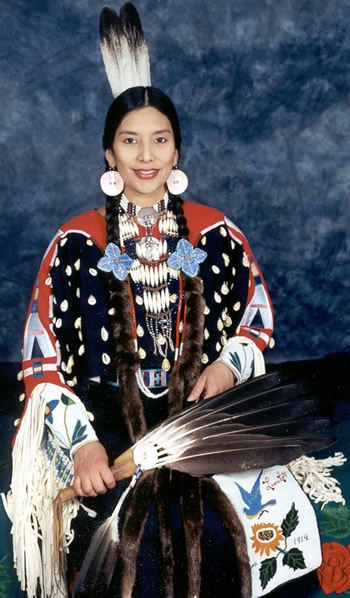 The strength and integrity of these people who populated the land some ten thousand years before the European arrival was demonstrated to me in just a few minutes when local Nez Perce arts council chairperson, Angel Sobotta, came aboard for a short talk. She spoke with such eloquence and elegant authority that the small audience was transfixed. We learned as much about her pride in her significant ancestors as her little family and young children. Even though she must have given this talk many times, her voice still quivered at the mention of her late grandparents that helped her recover and preserve the endangered traditions. Her message was clearly one of peace and reconciliation, and not just for her people alone, but for all the planet.
This retelling may sound emotive and melodramatic, but when travel companies talk about the now proverbial “transformational and experiential” products sought out by the new wave of adventure travellers, it's hard to imagine something more effective and genuine than these encounters.
Fact File:
Established over 60 years ago by founder, Chuck West, the company that bears his name is one of the most ambitious adventure cruise lines around. Beginning in Alaska, Cruise West now offers itineraries as far afield as in Japan, Mexico, Antarctica and the Galapagos. The Seattle-based line just announced its most comprehensive sailing yet; the Voyages of the Great Explorers, a 335-day circumnavigation of the world.
Cruise West offers three variations within its Columbia and Snake River products, each visiting a different mix of natural and man-made sights.
The Northwest Passage is seven nights and eight days Portland to Portland. Prices begin at US$2999 per person which covers taxes / port charges / fees and onboard services.
Bookings can be made with any travel agent through a network of local sales representatives.
For a comprehensive catalogue, see www.cruisewest.com

Ship Details:
Vessel: Spirit of '98
Cruise Line: Cruise West
Star rating: 3 Stars
Max Passenger Capacity: 96
Entered Service: 1984, refurb 1995
Facilities: All cabins have private facilities, some have minibar. Bar/library/lecture room, dining room, sundeck/outdoor dining, exercise machine, Internet, elevator
Getting There: V Australia flies daily to LA from Sydney and now three times per week from Brisbane with easy domestic connections through Virgin Blue. Fares from Australia to Portland start from $1299 return. For full conditions and promo fares, see www.vaustralia.com.au
Australia's Kimberley: Living on Gwion Time
Expedition cruiser, Roderick Eime, comes face-to-face with an ancient hunter born before the ice age.
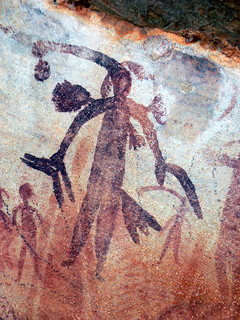 Blank faced and expressionless, he stood there staring at me. His slender arms adorned with intricate tassels hold a clutch of boomerangs as if inviting me to hunt with him. Literally frozen in time, this ancient gent has held this pose for perhaps 20,000 years.
I sat there staring back with the sort of spine-tingling sensation one experiences when confronted by the alien and inexplicable. He was not alone. Surrounding him were lesser, fainter figures, some dancing, some apparently paying homage, others plain and nude. What does this gathering mean? What is their message?
The Gwion Gwion people of Australia’s Kimberley are long gone, but their art remains in abundance, decorating sheltered rock caves and overhangs, lookouts and frescos throughout an area twice the size of Victoria. Often referred to as ‘Bradshaw Art’, these finely detailed and intricate figures remain a mystery to researchers and academics, fuelling vigorous debate about their origins and meaning.
Some explain them simply as the earliest examples of Australian Aboriginal art, transitioning through several periods over tens of thousands of years. Others, like lifelong researcher Grahame Walsh, believe they belong to a race long since vanished from our shores, even pre-dating current Aboriginal settlement. He draws comparisons with art and cultures as far afield as Papua New Guinea and Africa, but carefully stops short of making the claim as to their origins.
Beyond debate is their obvious contrast to the more modern ‘Wandjina’ art typified by the mouthless, ethereal figures representing the Aboriginal creators and controllers of all earthly things. At many sites the two art forms collide in an uncomfortable jostle that clearly demonstrates the contempt modern Aboriginals held for the Gwion Gwion. Heads of the delicate tasselled men are hammered and defaced in some cases, while elsewhere they are painted over by sprawling murals of the omnipotent Wandjinas.
The pigment used to create the beautiful Gwion Gwion is extremely resilient, so much so that C14 radiocarbon and other scientific dating methods cannot differentiate between it and the rock canvas. An indicator of their age was determined by a fossilised wasp nest built by the insects on top of a Bradshaw figure. It was reckoned to be at least 17,000 years old, placing the art beneath an indeterminate age beyond.
A shrill whistle from Gavin, our guide, interrupted my stupor and signalled time for an urgent return to the tender before the rapidly falling tide stranded us all. I scrambled down the escarpment and across the greedy mud bank, my feet disappearing beyond my knees in my haste to meet the outstretched arms frantically beckoning me aboard. Gavin engaged the outboard and immediately threw up a ‘rooster tail’ of grey-brown muck in an attempt to extricate the struggling craft. Kimberley tides are notoriously treacherous, rising and falling at the rate of over a metre an hour and swinging between ten metre extremes.
Man-handled back aboard, puffing and wheezing from the combined effects of excitement and exertion, Gavin smiles benevolently down on me from the pulpit of the centre-console runabout. “How was that?” he asks plainly as we make our way back to our 1000 tonne mother ship, True North, across the choppy Prince Regent River. “Lost for words?” For once, I was.
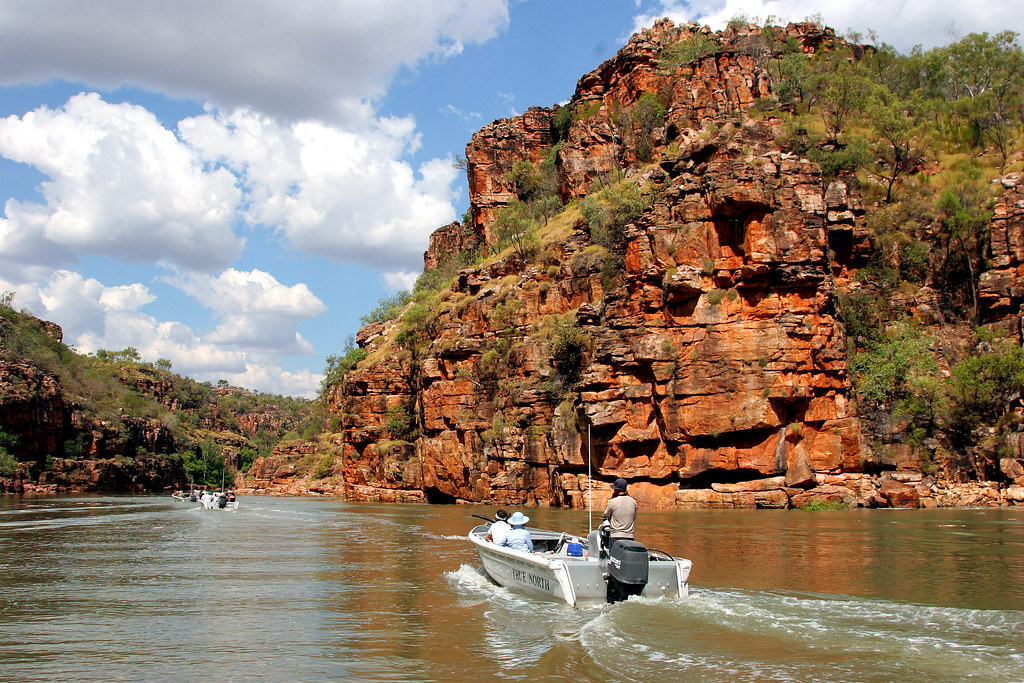 Gavin is the chief mate and expedition leader aboard the 36-passenger luxury adventure yacht and has spent most of his working life amongst the billion year old landscape of the Kimberleys. An expert fisherman, boat handler and unrepentant conservationist, Gavin rarely shares his most coveted Bradshaw art sites with guests.
“If people show a genuine interest in seeing some Braddies,” says Gavin, “we can usually find something on short notice. You and a handful of others are the only ones who’ve ever seen that site.” Yet his extensive catalogue of cave art sites is not recorded anywhere, instead the locations are closely guarded secrets entrusted to a few of the North Star Cruises masters and senior guides alone. “They’re up here,” he replies, pointing a finger purposefully to his temple.
I glance back across the wake of the dinghy trying to spot the high outcrop I had just scaled for my teasing glimpse of the most ancient Australians, but it’s quickly consumed by the enormity of my surroundings. The ship’s Bell jet helicopter races above us, ferrying goggle-eyed passengers back from a swim and frolic in a crystal clear, spring-fed water hole miles inland. Precipitous, golden-hued sandstone cliffs, vast mud banks and mangrove forests typify the landscape that has remained unchanged since before the time of the dinosaurs. Our brief incursion is but a minute speck of time in this geological calendar.
Regardless of your stance on the Bradshaw/Gwion Gwion debate, it’s abundantly clear that my handsome, lithesome hunter, having survived at least two ice ages, will be around long after my entire generation has departed. Perhaps his cryptic code will only be revealed by the next civilisation – if they can even find him again.
Fact File:
North Star Cruises operate the 50 metre, 36-passenger luxury expedition vessel, True North II on six and 12 night itineraries throughout the Kimberley region. Their twenty-plus year experience and intimate knowledge of the largely uncharted river and inlet system sets them apart from other similar operators in Australia’s remote North West.
Prices start from $8995 per person twin share for the six night expedition and $13,995 for twelve nights. Includes all meals, transfers and water-based excursions. Helicopter excursions separate.
For further information contact North Star Cruises on 08 9192 1829 or visit www.northstarcruises.com.au
Blank faced and expressionless, he stood there staring at me. His slender arms adorned with intricate tassels hold a clutch of boomerangs as if inviting me to hunt with him. Literally frozen in time, this ancient gent has held this pose for perhaps 20,000 years.I sat there staring back with the sort of spine-tingling sensation one experiences when confronted by the alien and inexplicable. He was not alone. Surrounding him were lesser, fainter figures, some dancing, some apparently paying homage, others plain and nude. What does this gathering mean? What is their message?
The Gwion Gwion people of Australia’s Kimberley are long gone, but their art remains in abundance, decorating sheltered rock caves and overhangs, lookouts and frescos throughout an area twice the size of Victoria. Often referred to as ‘Bradshaw Art’, these finely detailed and intricate figures remain a mystery to researchers and academics, fuelling vigorous debate about their origins and meaning.
Some explain them simply as the earliest examples of Australian Aboriginal art, transitioning through several periods over tens of thousands of years. Others, like lifelong researcher Grahame Walsh, believe they belong to a race long since vanished from our shores, even pre-dating current Aboriginal settlement. He draws comparisons with art and cultures as far afield as Papua New Guinea and Africa, but carefully stops short of making the claim as to their origins.
Beyond debate is their obvious contrast to the more modern ‘Wandjina’ art typified by the mouthless, ethereal figures representing the Aboriginal creators and controllers of all earthly things. At many sites the two art forms collide in an uncomfortable jostle that clearly demonstrates the contempt modern Aboriginals held for the Gwion Gwion. Heads of the delicate tasselled men are hammered and defaced in some cases, while elsewhere they are painted over by sprawling murals of the omnipotent Wandjinas.
The pigment used to create the beautiful Gwion Gwion is extremely resilient, so much so that C14 radiocarbon and other scientific dating methods cannot differentiate between it and the rock canvas. An indicator of their age was determined by a fossilised wasp nest built by the insects on top of a Bradshaw figure. It was reckoned to be at least 17,000 years old, placing the art beneath an indeterminate age beyond.
A shrill whistle from Gavin, our guide, interrupted my stupor and signalled time for an urgent return to the tender before the rapidly falling tide stranded us all. I scrambled down the escarpment and across the greedy mud bank, my feet disappearing beyond my knees in my haste to meet the outstretched arms frantically beckoning me aboard. Gavin engaged the outboard and immediately threw up a ‘rooster tail’ of grey-brown muck in an attempt to extricate the struggling craft. Kimberley tides are notoriously treacherous, rising and falling at the rate of over a metre an hour and swinging between ten metre extremes.
Man-handled back aboard, puffing and wheezing from the combined effects of excitement and exertion, Gavin smiles benevolently down on me from the pulpit of the centre-console runabout. “How was that?” he asks plainly as we make our way back to our 1000 tonne mother ship, True North, across the choppy Prince Regent River. “Lost for words?” For once, I was.
Gavin is the chief mate and expedition leader aboard the 36-passenger luxury adventure yacht and has spent most of his working life amongst the billion year old landscape of the Kimberleys. An expert fisherman, boat handler and unrepentant conservationist, Gavin rarely shares his most coveted Bradshaw art sites with guests.“If people show a genuine interest in seeing some Braddies,” says Gavin, “we can usually find something on short notice. You and a handful of others are the only ones who’ve ever seen that site.” Yet his extensive catalogue of cave art sites is not recorded anywhere, instead the locations are closely guarded secrets entrusted to a few of the North Star Cruises masters and senior guides alone. “They’re up here,” he replies, pointing a finger purposefully to his temple.
I glance back across the wake of the dinghy trying to spot the high outcrop I had just scaled for my teasing glimpse of the most ancient Australians, but it’s quickly consumed by the enormity of my surroundings. The ship’s Bell jet helicopter races above us, ferrying goggle-eyed passengers back from a swim and frolic in a crystal clear, spring-fed water hole miles inland. Precipitous, golden-hued sandstone cliffs, vast mud banks and mangrove forests typify the landscape that has remained unchanged since before the time of the dinosaurs. Our brief incursion is but a minute speck of time in this geological calendar.
Regardless of your stance on the Bradshaw/Gwion Gwion debate, it’s abundantly clear that my handsome, lithesome hunter, having survived at least two ice ages, will be around long after my entire generation has departed. Perhaps his cryptic code will only be revealed by the next civilisation – if they can even find him again.
Fact File:
North Star Cruises operate the 50 metre, 36-passenger luxury expedition vessel, True North II on six and 12 night itineraries throughout the Kimberley region. Their twenty-plus year experience and intimate knowledge of the largely uncharted river and inlet system sets them apart from other similar operators in Australia’s remote North West.
Prices start from $8995 per person twin share for the six night expedition and $13,995 for twelve nights. Includes all meals, transfers and water-based excursions. Helicopter excursions separate.
For further information contact North Star Cruises on 08 9192 1829 or visit www.northstarcruises.com.au
Palermo, the city of countless conquests and crossroad of cultures.

When the huge Costa Serena jostled for a berth in the busy summertime season in Sicily, it was clear Palermo was not just another big ship whistle stop. Roderick Eime revisits.
I hadn’t been to Palermo for thirty years, and I’m pleased to report that very little has changed. Last time was as a student backpacker, this time it was almost red-carpet as we filed aboard our luxury coaches for a series of shore excursions into this 2800-year-old port.
I hadn’t been to Palermo for thirty years, and I’m pleased to report that very little has changed. Last time was as a student backpacker, this time it was almost red-carpet as we filed aboard our luxury coaches for a series of shore excursions into this 2800-year-old port.
New Italian Mega Liner a Floating Pantheon

Passengers arriving aboard the brand new Costa Cruises flagship, Costa Serena, could be forgiven for thinking they'd walked into some Greco-Roman epic. Roderick Eime stows away for a glimpse of glamour cruising, Italian-style.
Launched amid great fanfare in Marseilles on May 19, the 114,000-tonne, 1,500-berth leviathan is the latest in the frantic Costa build programme that will bring the fleet to 15 vessels by 2010. Following her slightly smaller sister, Costa Concordia, she will be followed by the similarly massive Costa Luminosa in 2008.
West ‘n’ Wild
from

Bleak and bereft to the untrained eye, the wonders of Western Australia’s Coral Coast are now front-and-centre on the world eco-tourism stage. Ocean’s Roderick Eime sails aboard True North for an intimate look at our extraordinary Western shore.
“There she is!” cried Greg our champion fisherman. His trained eyes, aided by Polaroid sunglasses, spotted the telltale wake on the shimmering sea. It was just a ripple at first, but soon looked like a midget submarine just beneath the surface. “She” was a magnificent whale shark, the world’s largest fish, and she was coming straight for us.
This beautiful and serene creature is at least partly responsible for the surge in interest in Western Australia’s Coral Coast. The other significant and established attraction is the wild dolphin viewing at Monkey Mia, but the bounty of activities and sightseeing opportunities on the Coral Coast just begins there.
The Coral Coast starts about 100 kilometres north of Perth and continues its upward sweep beyond the continent’s westernmost extremity at Steep Point, to Exmouth and the famous Ningaloo Reef, a distance of around 1200 kilometres. Its name, as you’ve already deduced, is derived from the rich coral formations along its length, unusual because they exist so far south.
Fed by the warm, southward flowing Leeuwin Current, the water is kept constant at about 20 to 22 degrees allowing the formation of coral and the growth of sea grass. Bright, colourful tropical fish abound in the waters where they really shouldn’t and the clash of northward currents create a rich mix of nutrients that make for great fishing and big lobsters.
This expansive region is itself dived into smaller parcels, popularly known as the Turquoise, Batavia and Outback Coasts.
I set out to explore this region aboard one of the only vessels offering a comprehensive cruise itinerary in the region: North Star Cruises’ smart new 36-passenger expedition yacht, True North II. She travels this route but once a year as she return s to her home port of Broome from Fremantle to begin the busy Kimberley cruise season.
The Turquoise Coast is the first region we encountered and is an easy drive or sail from the city of Perth and dotted with popular weekend attractions for Perth locals looking for a short getaway. The iconic landmark of the region is the famous ‘pinnacles’ in the Nambung National Park, four kilometres inland. Although the pinnacles were not on our itinerary, a previous visit brought home the highly unusual spectacle of these limestone and quartz formations. In the evolutionary scheme of things, these bizarre natural objects are a brief quirk in this slow but dynamic desert landscape.
Other regional highlights include the Jurien Bay colony of noisy Australian Sea Lions and the wild colours of the Yarra Yarra Salt Lakes that create brilliant hues of pink, red and purple in the setting sun.
Our first stop en route north is the unassuming and outwardly unexciting Abrolhus Islands. Located about 60 kilometres offshore from Geraldton, the bleak flat islands were little comfort for the Batavia survivors who endured unimaginable hardships during their months of isolation here in 1629 (see breakout). Authorities believe there are almost twenty wrecks dotted around the islands
Today the islands are decorated with clusters of fishing huts for the itinerant crayfish hunters and recreational fishermen. A memorial and plaque stands testament to its brutal past.
The Batavia Coast is home to several land-based curiosities, including the world famous micronation, Hutt River Province about 30 kilometres inland from Gerladton. Visit Prince Leonard of Hutt and pick up a knighthood while you’re there. HRH celebrates thirty seven years on the throne this year. Onya Leonard!
The regional hub is the town of Geraldton. Rich with maritime history, the town of 30,000 is a thriving business and tourism centre. Windsurfing, fishing, diving, surfing and swimming are all popular watersports here.
Overlooking the city centre is the recently completed HMAS Sydney Memorial which serves as a poignant reminder to another nearby naval tragedy, that of the loss of Australia’s flagship in November 1941 in a battle with the German raider Kormoran (see breakout).
Beyond the Batavia Coast and her many distractions, we venture to the pristine waters of Shark Bay and the namesake marine park that is home to the famous wild dolphins of Monkey Mia and the mysterious whale sharks. Ashore we explore Steep Point, taking delight in the knowledge we are the most westerly humans on the continent for a few moments.
True North lingers in the region, now known as the Outback Coast, long enough for us to explore parts of Dirk Hartog Island, Turtle Bay, Bernier Island, Norwegian Bay and the nominal home of the whale shark, Ningaloo Reef.
Shark Bay is truly an Australian tourism jewel and is now recognised as a World Heritage site by UNESCO for its natural treasures. Access for cruise vessels like True North is limited and we must do the bulk of our exploring in the tenders, such is the determination of WA’s Department of Conservation to protect this region.
The towns of Denham, Carnarvon and Monkey Mia have expanded considerably over the last decade as the reputation of this area has spread. Once a casual and leisurely affair, the iconic wild dolphin-feeding at Monkey Mia is now strictly managed by rangers who are determined to retain the very special experience, but not corrupt the beautiful creatures with over-indulgence. Apart from the celebrity dolphins, mighty manta rays, huge humpback whales, docile dugongs and squadrons of seabirds patrol this ecologically abundant body of water at various times.
Now (April – July) is Whale Shark season. These magnificent creatures, the world’s largest fish, congregate offshore from the Cape Range National Park each year. Around Exmouth and particularly Ningaloo Reef, are the only locations in the world where their presence can be guaranteed and their habits studied by marine scientists. Just where they go in the meantime is still a mystery.
Greg stopped shouting and was just pointing now as the massive aquatic beast neared our little fishing dingy. We’d been busily hauling in a rewarding catch of snapper for tonight’s dinner when the apparition appeared. Just when I thought I’d drop the rod and dive in with the animal, it dived. The four of us scoured the sea for another fifteen minutes and were even joined by another tender also on the lookout, but she’d gone as suddenly and mysteriously as she had arrived.
Swimming with whale sharks, it should be noted, is also now strictly controlled with licenses issued to a limited number of operators, all of whom are based in the village of Coral Bay north of Carnarvon. If a stray animal stumbles on you when you are out fishing, well that’s just good luck. Regardless, swimming with them is governed by laws that forbid you from approaching closer than 3 metres. Boats must maintain a 250 metre distance.
Our 10-day mini-odyssey finishes in Dampier, but not before we explore the remote and forlorn Monte Bello Islands, once the site of British nuclear tests in the 1950s. In one test, a war surplus frigate was vaporised by a 25 kiloton device detonated beneath its hull. Warning signs are still erected on the beach where loggerhead turtles have returned to nest and a rusty jeep lies hidden in the dunes, once too radioactive to recover.
Disguised as rugged and inhospitable, Western Australia’s Coral Coast successfully deterred all but the most determined explorers for hundreds, even thousands of years. Only now is its exquisite and very special natural beauty being fully appreciated by the conservation conscious and eco-tourists in search of new and rewarding destinations.

Bleak and bereft to the untrained eye, the wonders of Western Australia’s Coral Coast are now front-and-centre on the world eco-tourism stage. Ocean’s Roderick Eime sails aboard True North for an intimate look at our extraordinary Western shore.
“There she is!” cried Greg our champion fisherman. His trained eyes, aided by Polaroid sunglasses, spotted the telltale wake on the shimmering sea. It was just a ripple at first, but soon looked like a midget submarine just beneath the surface. “She” was a magnificent whale shark, the world’s largest fish, and she was coming straight for us.
This beautiful and serene creature is at least partly responsible for the surge in interest in Western Australia’s Coral Coast. The other significant and established attraction is the wild dolphin viewing at Monkey Mia, but the bounty of activities and sightseeing opportunities on the Coral Coast just begins there.
The Coral Coast starts about 100 kilometres north of Perth and continues its upward sweep beyond the continent’s westernmost extremity at Steep Point, to Exmouth and the famous Ningaloo Reef, a distance of around 1200 kilometres. Its name, as you’ve already deduced, is derived from the rich coral formations along its length, unusual because they exist so far south.
Fed by the warm, southward flowing Leeuwin Current, the water is kept constant at about 20 to 22 degrees allowing the formation of coral and the growth of sea grass. Bright, colourful tropical fish abound in the waters where they really shouldn’t and the clash of northward currents create a rich mix of nutrients that make for great fishing and big lobsters.
This expansive region is itself dived into smaller parcels, popularly known as the Turquoise, Batavia and Outback Coasts.
I set out to explore this region aboard one of the only vessels offering a comprehensive cruise itinerary in the region: North Star Cruises’ smart new 36-passenger expedition yacht, True North II. She travels this route but once a year as she return s to her home port of Broome from Fremantle to begin the busy Kimberley cruise season.
The Turquoise Coast is the first region we encountered and is an easy drive or sail from the city of Perth and dotted with popular weekend attractions for Perth locals looking for a short getaway. The iconic landmark of the region is the famous ‘pinnacles’ in the Nambung National Park, four kilometres inland. Although the pinnacles were not on our itinerary, a previous visit brought home the highly unusual spectacle of these limestone and quartz formations. In the evolutionary scheme of things, these bizarre natural objects are a brief quirk in this slow but dynamic desert landscape.
Other regional highlights include the Jurien Bay colony of noisy Australian Sea Lions and the wild colours of the Yarra Yarra Salt Lakes that create brilliant hues of pink, red and purple in the setting sun.
Our first stop en route north is the unassuming and outwardly unexciting Abrolhus Islands. Located about 60 kilometres offshore from Geraldton, the bleak flat islands were little comfort for the Batavia survivors who endured unimaginable hardships during their months of isolation here in 1629 (see breakout). Authorities believe there are almost twenty wrecks dotted around the islands
Today the islands are decorated with clusters of fishing huts for the itinerant crayfish hunters and recreational fishermen. A memorial and plaque stands testament to its brutal past.
The Batavia Coast is home to several land-based curiosities, including the world famous micronation, Hutt River Province about 30 kilometres inland from Gerladton. Visit Prince Leonard of Hutt and pick up a knighthood while you’re there. HRH celebrates thirty seven years on the throne this year. Onya Leonard!
The regional hub is the town of Geraldton. Rich with maritime history, the town of 30,000 is a thriving business and tourism centre. Windsurfing, fishing, diving, surfing and swimming are all popular watersports here.
Overlooking the city centre is the recently completed HMAS Sydney Memorial which serves as a poignant reminder to another nearby naval tragedy, that of the loss of Australia’s flagship in November 1941 in a battle with the German raider Kormoran (see breakout).
Beyond the Batavia Coast and her many distractions, we venture to the pristine waters of Shark Bay and the namesake marine park that is home to the famous wild dolphins of Monkey Mia and the mysterious whale sharks. Ashore we explore Steep Point, taking delight in the knowledge we are the most westerly humans on the continent for a few moments.
True North lingers in the region, now known as the Outback Coast, long enough for us to explore parts of Dirk Hartog Island, Turtle Bay, Bernier Island, Norwegian Bay and the nominal home of the whale shark, Ningaloo Reef.
Shark Bay is truly an Australian tourism jewel and is now recognised as a World Heritage site by UNESCO for its natural treasures. Access for cruise vessels like True North is limited and we must do the bulk of our exploring in the tenders, such is the determination of WA’s Department of Conservation to protect this region.
The towns of Denham, Carnarvon and Monkey Mia have expanded considerably over the last decade as the reputation of this area has spread. Once a casual and leisurely affair, the iconic wild dolphin-feeding at Monkey Mia is now strictly managed by rangers who are determined to retain the very special experience, but not corrupt the beautiful creatures with over-indulgence. Apart from the celebrity dolphins, mighty manta rays, huge humpback whales, docile dugongs and squadrons of seabirds patrol this ecologically abundant body of water at various times.
Now (April – July) is Whale Shark season. These magnificent creatures, the world’s largest fish, congregate offshore from the Cape Range National Park each year. Around Exmouth and particularly Ningaloo Reef, are the only locations in the world where their presence can be guaranteed and their habits studied by marine scientists. Just where they go in the meantime is still a mystery.
Greg stopped shouting and was just pointing now as the massive aquatic beast neared our little fishing dingy. We’d been busily hauling in a rewarding catch of snapper for tonight’s dinner when the apparition appeared. Just when I thought I’d drop the rod and dive in with the animal, it dived. The four of us scoured the sea for another fifteen minutes and were even joined by another tender also on the lookout, but she’d gone as suddenly and mysteriously as she had arrived.
Swimming with whale sharks, it should be noted, is also now strictly controlled with licenses issued to a limited number of operators, all of whom are based in the village of Coral Bay north of Carnarvon. If a stray animal stumbles on you when you are out fishing, well that’s just good luck. Regardless, swimming with them is governed by laws that forbid you from approaching closer than 3 metres. Boats must maintain a 250 metre distance.
Our 10-day mini-odyssey finishes in Dampier, but not before we explore the remote and forlorn Monte Bello Islands, once the site of British nuclear tests in the 1950s. In one test, a war surplus frigate was vaporised by a 25 kiloton device detonated beneath its hull. Warning signs are still erected on the beach where loggerhead turtles have returned to nest and a rusty jeep lies hidden in the dunes, once too radioactive to recover.
Disguised as rugged and inhospitable, Western Australia’s Coral Coast successfully deterred all but the most determined explorers for hundreds, even thousands of years. Only now is its exquisite and very special natural beauty being fully appreciated by the conservation conscious and eco-tourists in search of new and rewarding destinations.
Subscribe to:
Posts (Atom)
Look who's talking
Welcome to my new temporary website.
Welcome to Travography, the website for Australian travel journalist and broadcaster, Roderick Eime. This is a new location for this website...

-
Passengers arriving aboard the brand new Costa Cruises flagship, Costa Serena , could be forgiven for thinking they'd walked into some G...
-
STORY www.travlar.com/2024/09/discover-palau.html STORY https://issuu.com/rodeime/docs/pacific-island-living-issue-38_-_palau IMAGES www...
-
STORY https://issuu.com/rodeime/docs/mindfood_nov-2023-sri-lanka IMAGES www.flickr.com/photos/rodeime/albums/72177720308961233/


